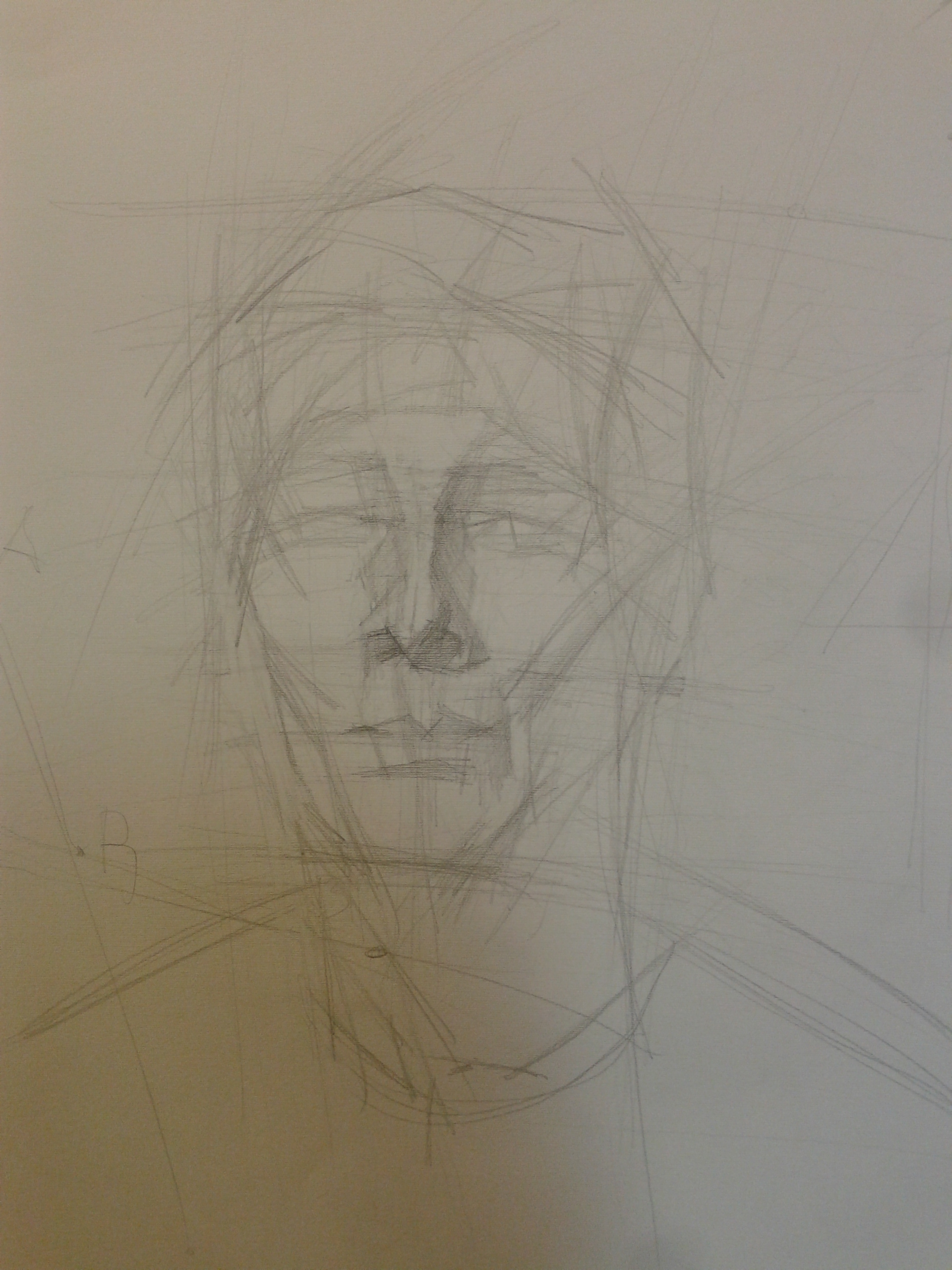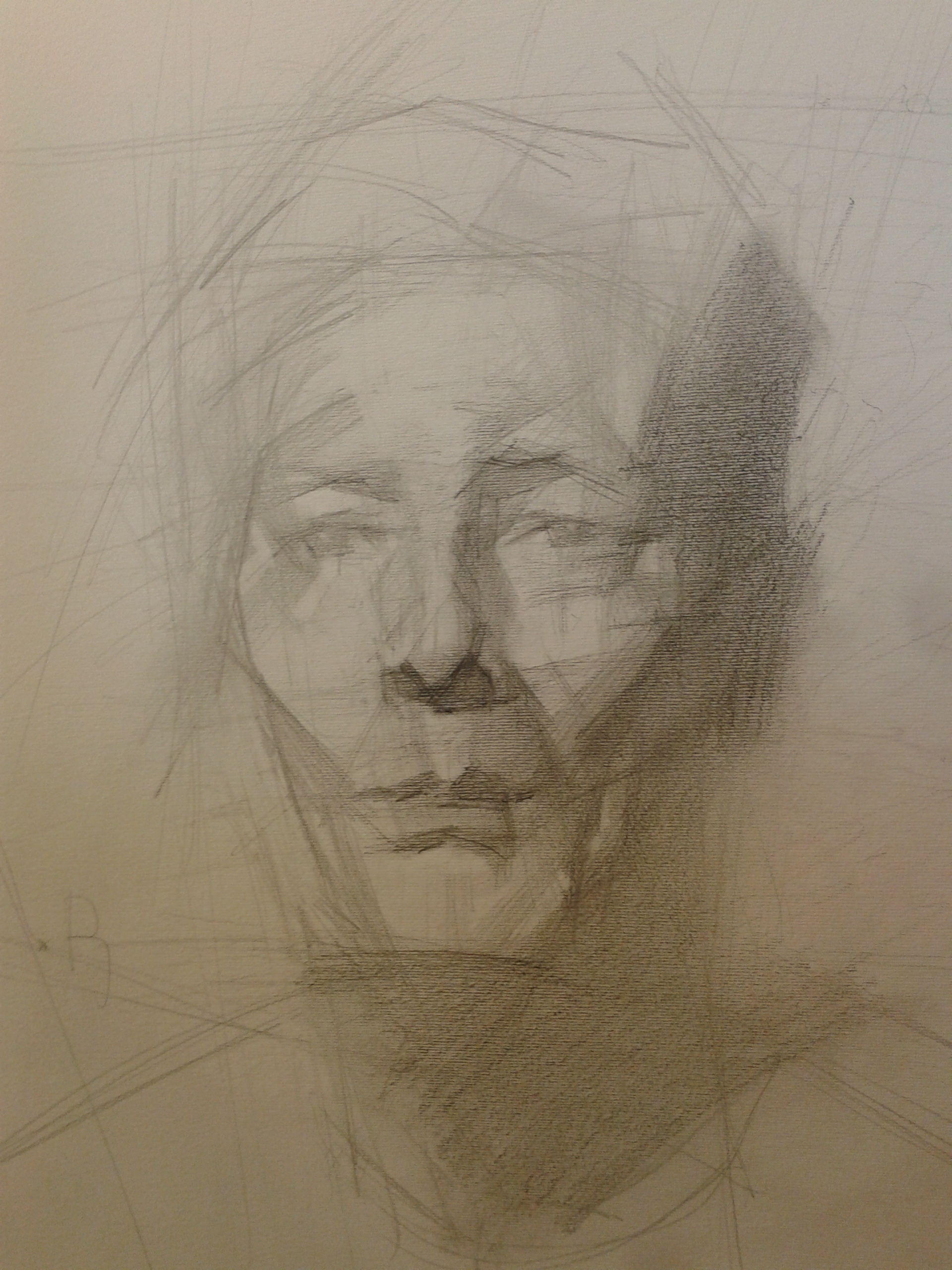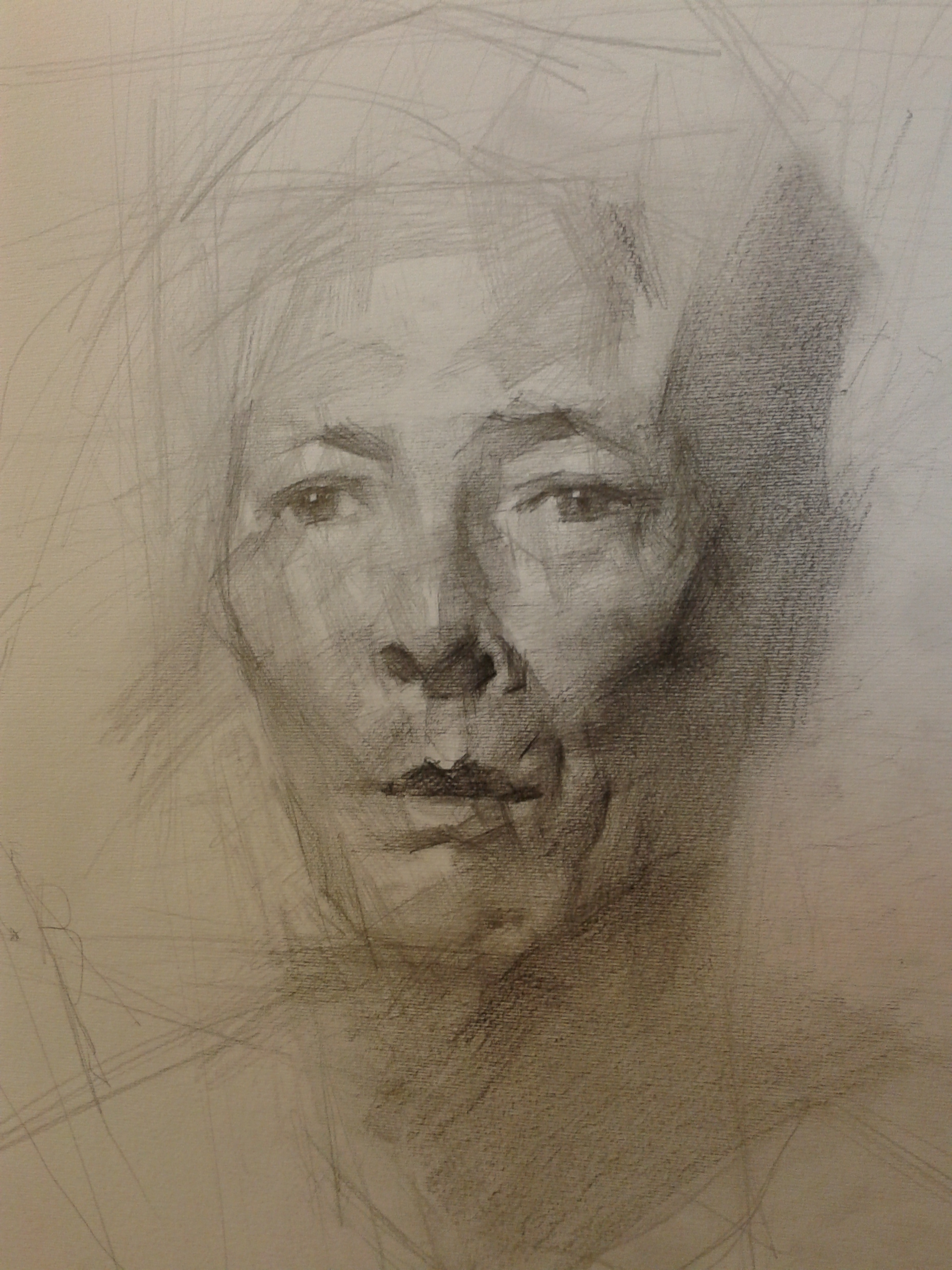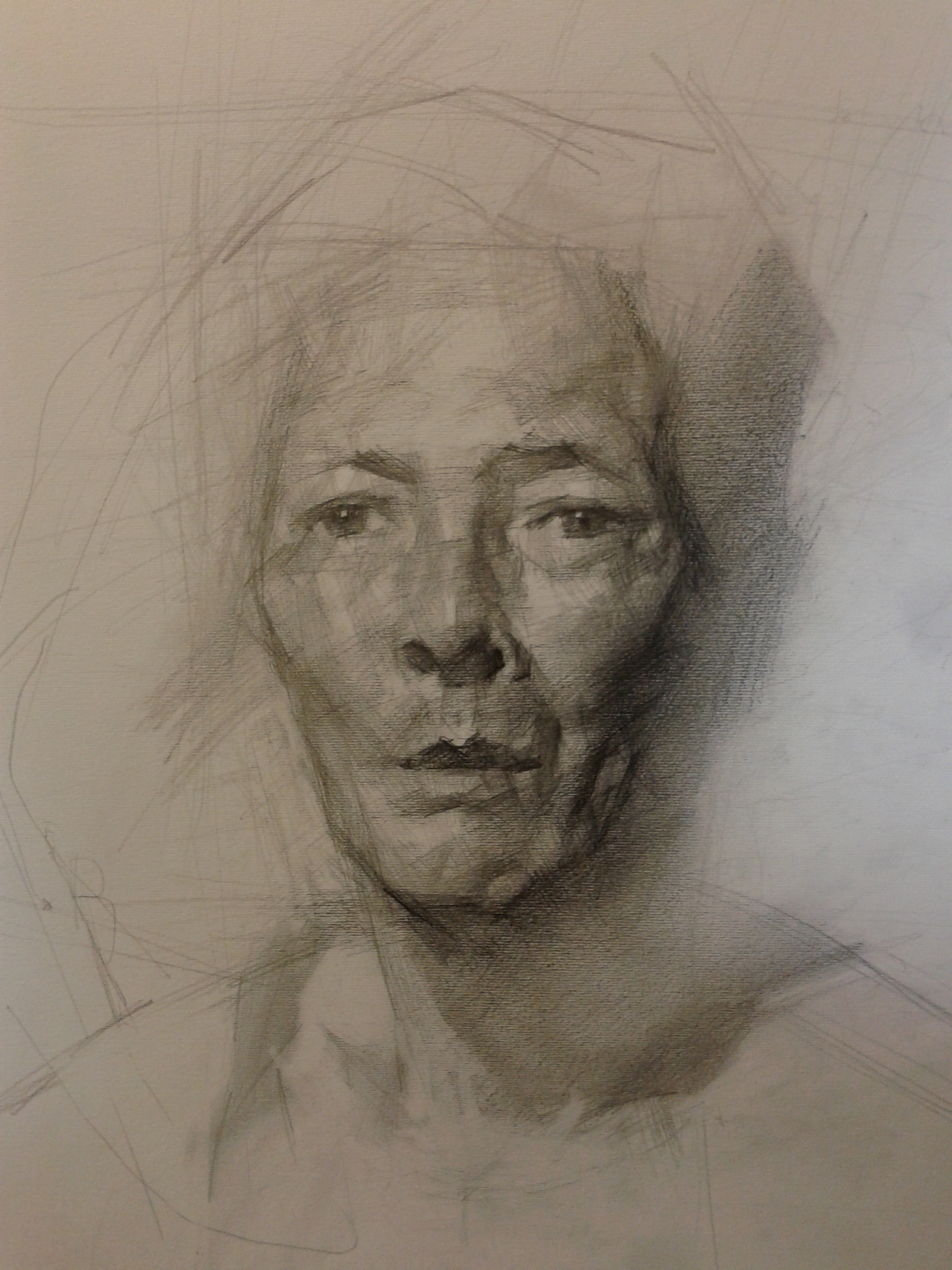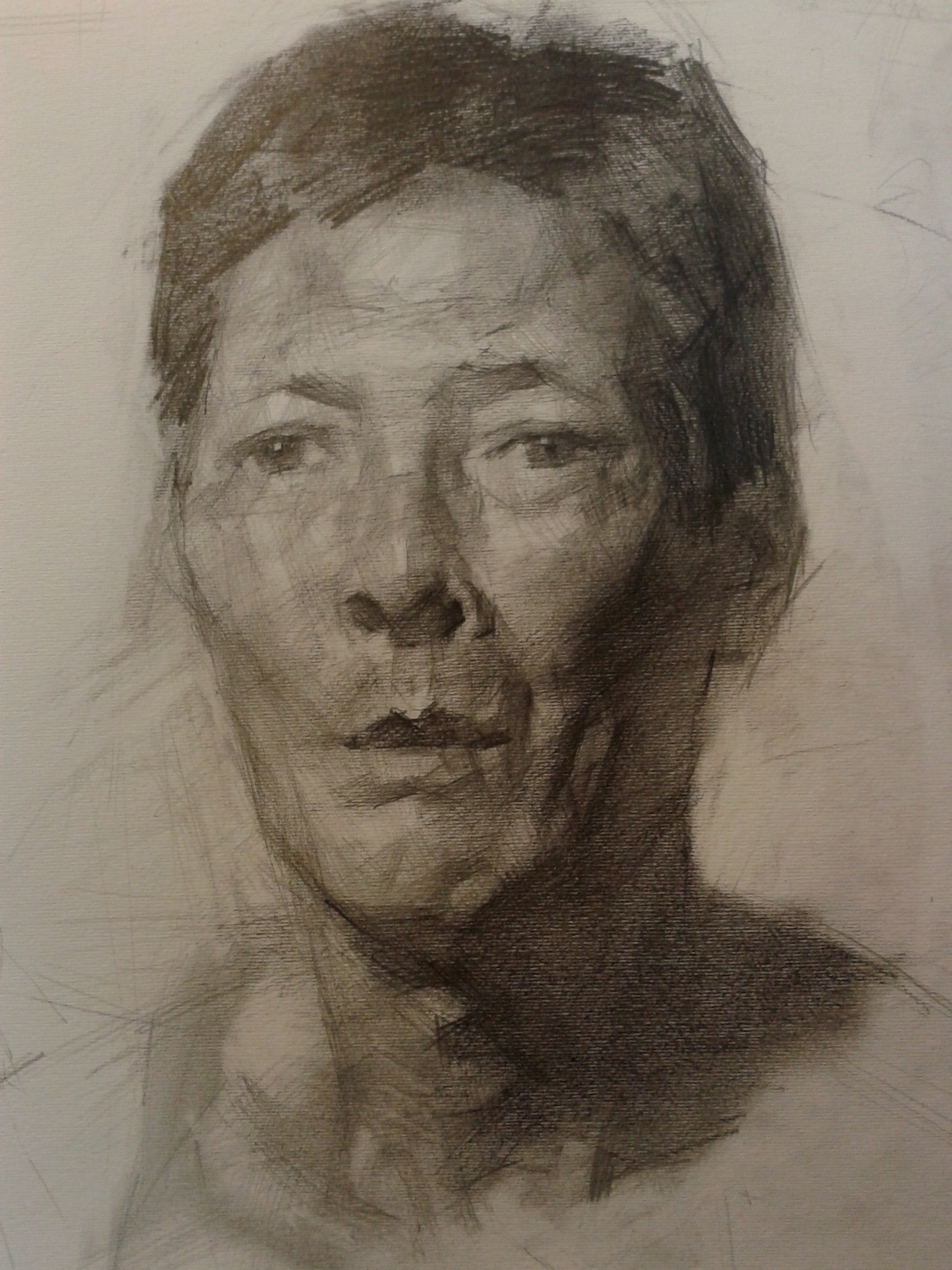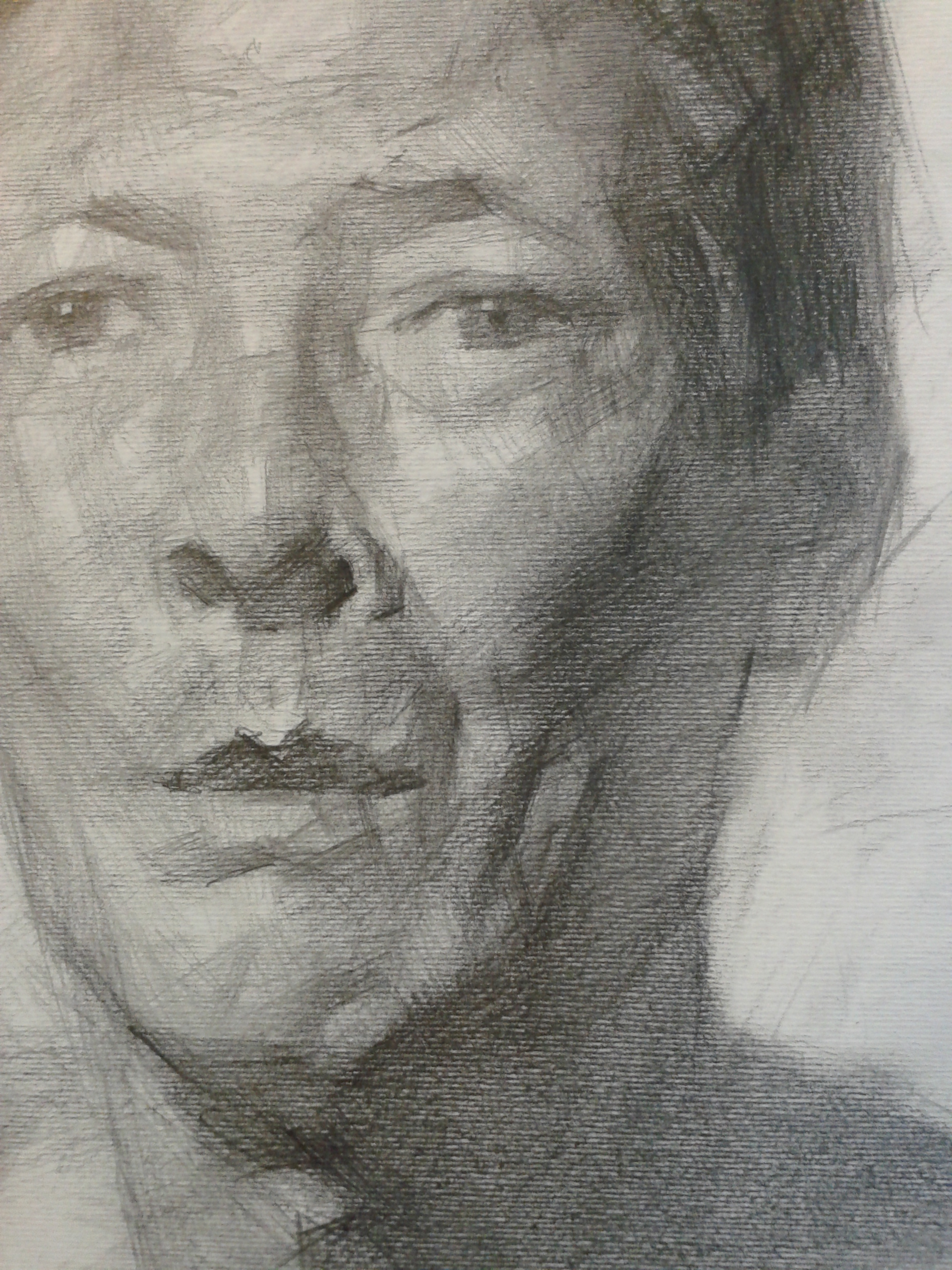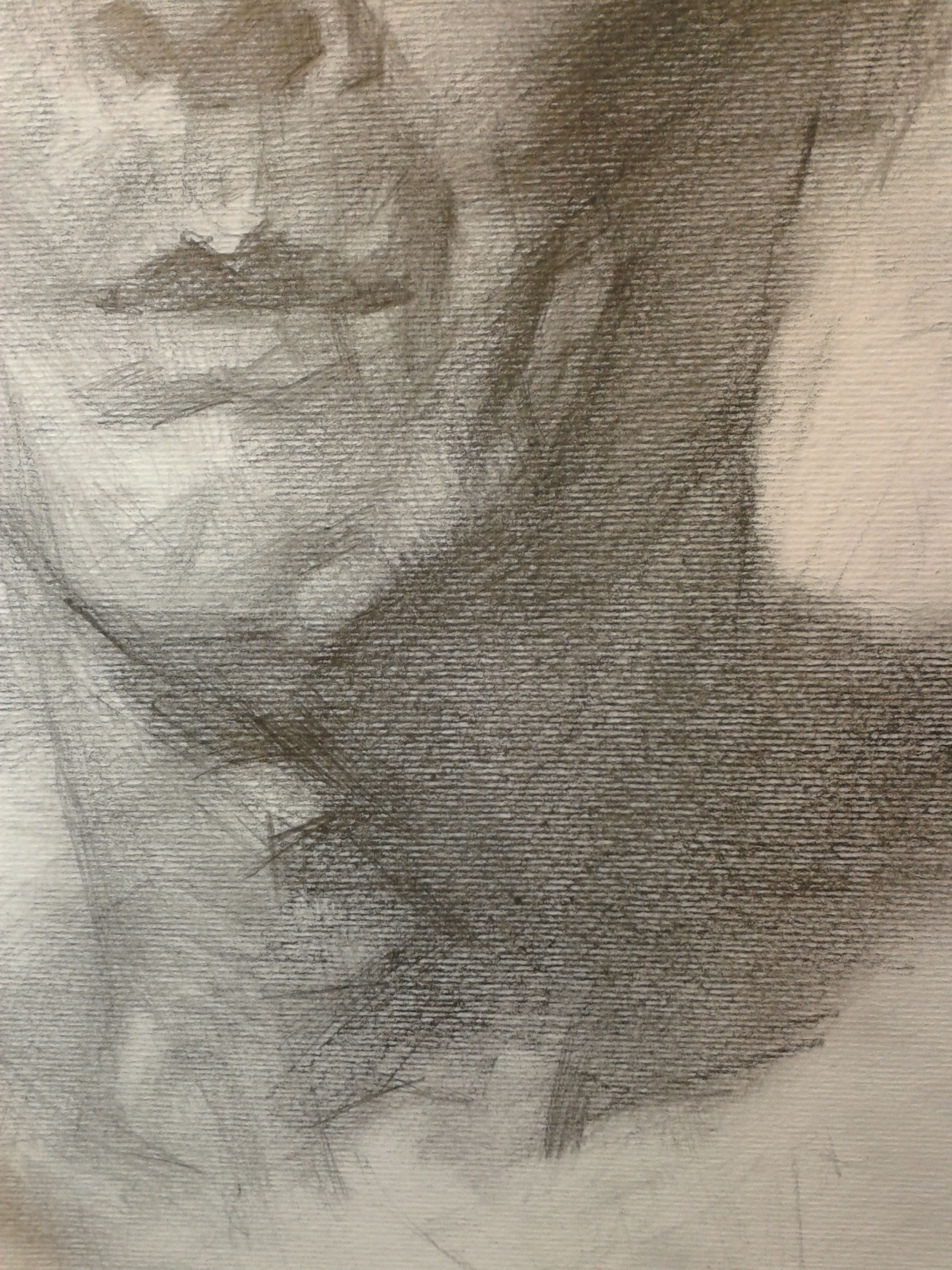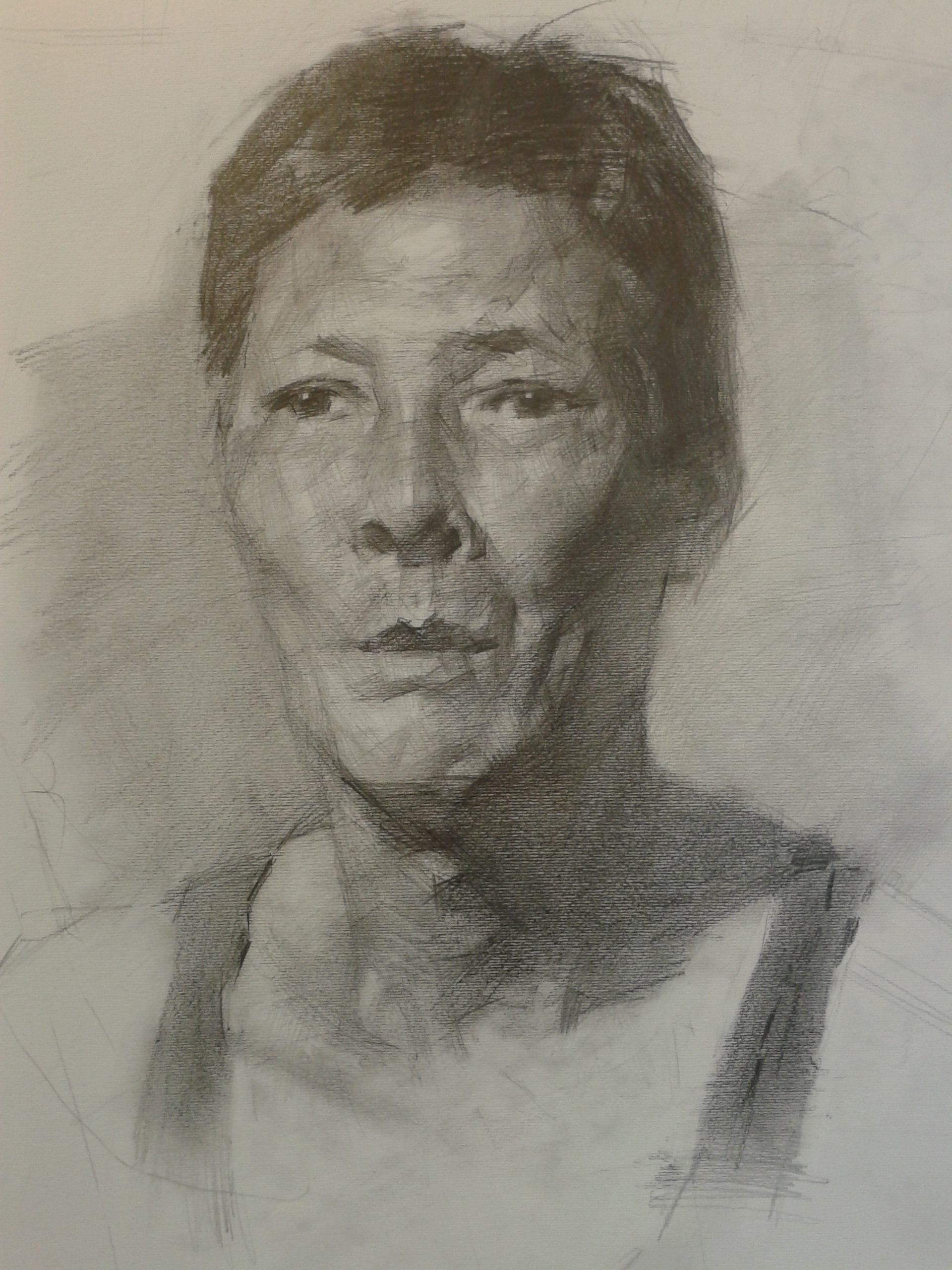
If you're passionate about improving your drawing and creating portraits that are both technically accurate and full of expression, here are some key insights from Mr. Yim's approach that you can apply to your own work:
The Block-In: Laying the Foundation
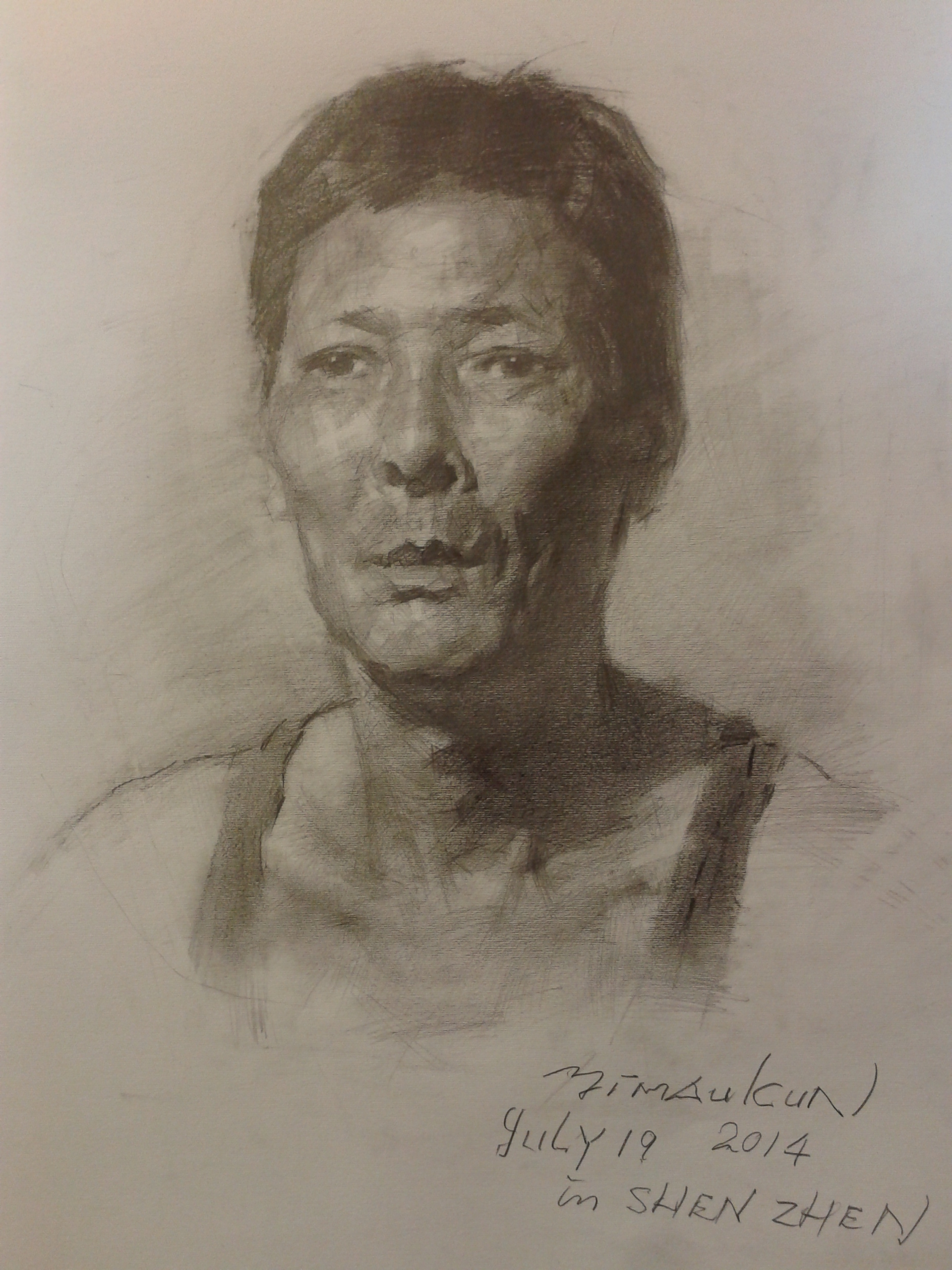
Mr. Yim begins each drawing with a technique known as the block-in, using straight lines to establish the structure and proportions of the portrait. Rather than focusing on details from the start, he emphasizes capturing the overall shape and volume of the subject. This method helps you find the right proportions early on, preventing mistakes that might be harder to fix later.
“Think of the block-in as constructing the framework of a house,” Mr. Yim often says. “You must first build a strong structure before you can add the details.”
Planar Analysis: Understanding Volume
One of the key techniques in Mr. Yim's drawing approach is planar analysis, where you break down complex forms into flat planes. By doing this, you begin to understand how light interacts with the subject, which is crucial for rendering realistic portraits. Planar analysis helps you see the subject as three-dimensional, making it easier to apply shading and create depth in your drawings.
Mastering Likeness and Proportions
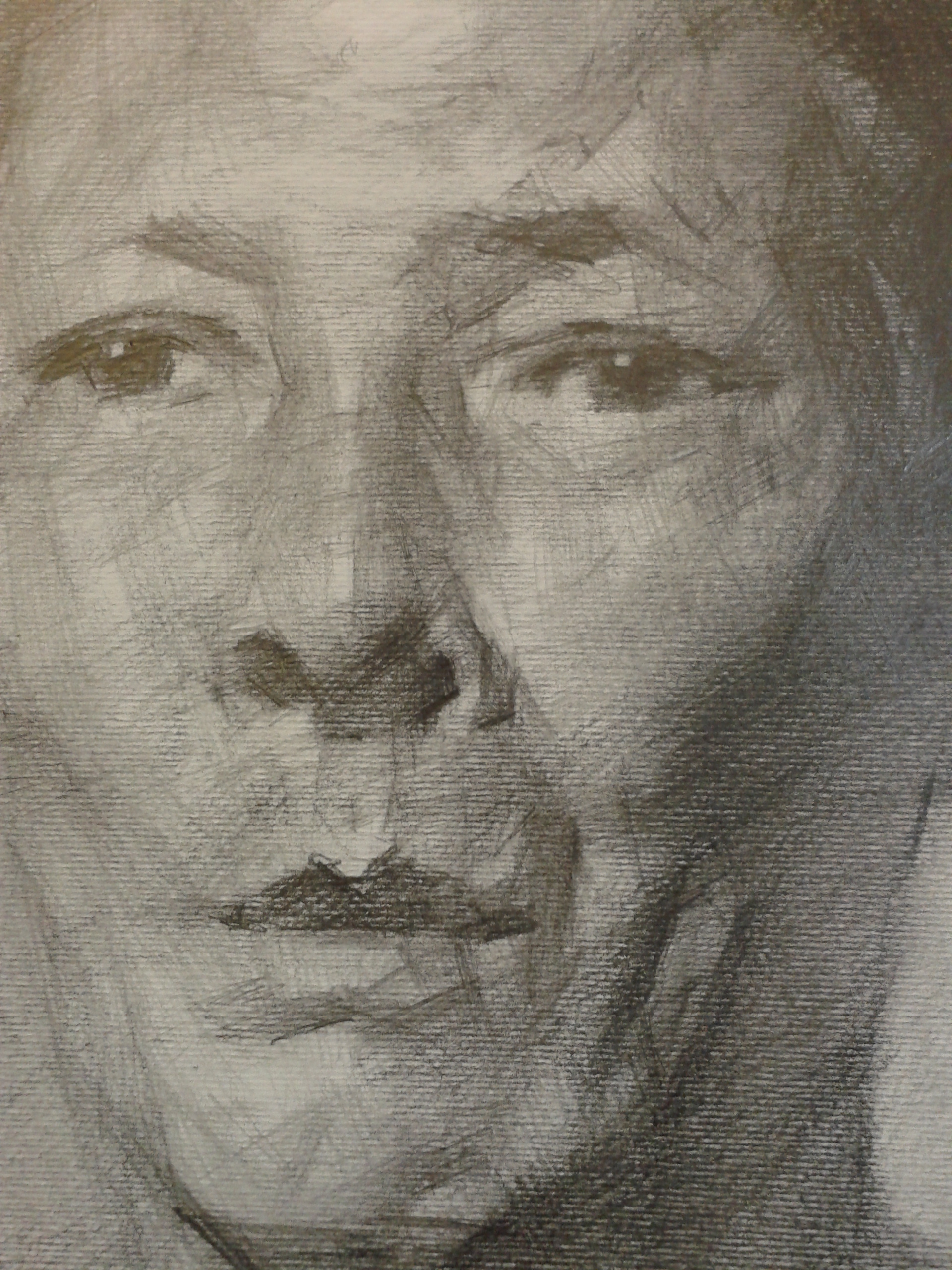
Mr. Yim emphasizes that drawing is the foundation for achieving likeness and accurate proportions. He teaches that the ability to capture these elements comes from careful observation and a deep understanding of form.
Through his methodical approach, Mr. Yim helps students develop the skills to render portraits that are precise and lifelike, but he reminds us that the art of drawing is much more than copying—it's about capturing the personality and essence of the subject.
Shading and Value: Building Volume Through Light and Shadow
A portrait comes to life through careful shading. Mr. Yim teaches students to focus on value relationships—the interplay of light and dark areas—to create volume. By developing shadows gradually and leaving light areas for the final stages, you can build up a realistic sense of depth.
His advice? Avoid rushing into the details. Likeness and form come from solid value foundations, not from premature detailing.
The Connection Between Drawing and Oil Painting
Drawing and painting may seem like separate disciplines, but Mr. Yim sees them as deeply connected. In his philosophy, mastering drawing is essential before moving to oil painting. Drawing teaches you how to see and capture form, while oil painting is a language of color. With strong drawing skills, you'll be able to focus on the expressive qualities of color in your painting without worrying about proportions or structure.
Patience, Observation, and Practice
Great portraits aren't created in a rush. Mr. Yim teaches that patience and careful observation are at the heart of every successful portrait. Each line, each shadow, each subtle detail must be built up over time. With consistent practice and a focus on improving your drawing skills, your ability to capture likeness and expression will grow steadily.