Drawing
Why did I spend 48 hours on a classical bust study – the role of classical bust study in drawing
The role of bust study in training observation
Oct 7, 2018
Why is classical bust study an important part of art training? Classical bust study is a good way to train your observation skills which can then be broadly applied to all forms of art.
Holistic observation
In drawing and painting, we need to observe the subject as a whole to analyze its proportion and perspective, value relationship, structure, etc. during block-in. For beginning artists, it’s quite natural that they are often attracted to details or specific parts of a subject and forget about the “forest.” Classical bust’s form is much simpler than a real human being’s and therefore helps the artist focus on observing the subject as a whole.
Value study
Since there is no color in a classical bust, the artist can solely focus on the study of value, analyze the value relationship of different color blocks, identify the lightest part and the darkest part of the cast and further analyze the value in each color block.
Planar analysis
Planar analysis is key to rendering volume on two dimensional media. However, dissecting a subject into blocks, planes and smaller planes doesn’t come naturally, it’s in fact, counter-intuitive. Classical bust’s clear structure and lack of color help us observe the structure, volume and planes and render volume with value and lines.
In-depth study
Lastly, unlike human models who may get tired from long time sitting, classical busts will never complain about for however long they have been sitting there. We can take as much time as we need for in-depth study of form, value and structure. Did I say that I once spent 48 hours on a classical bust study?
In 1978, after the Cultural Revolution, I visited alumni at the Guangzhou Fine Arts Academy. I ran into a retired art profession in the school. He asked me, “Mau-Kun Yim, you were the President of Academic Affairs of the Study Association. Do you have any theories why your class has so many outstanding graduates?” (There were more than ten renowned artists from my class). I replied, “Maybe it was because there was no education reform at the time (long term assignment was later removed from the curriculum due to education reform as a result of political movements), and we spent a solid four years on classical bust studies?”
Demonstration of Classical Bust Study
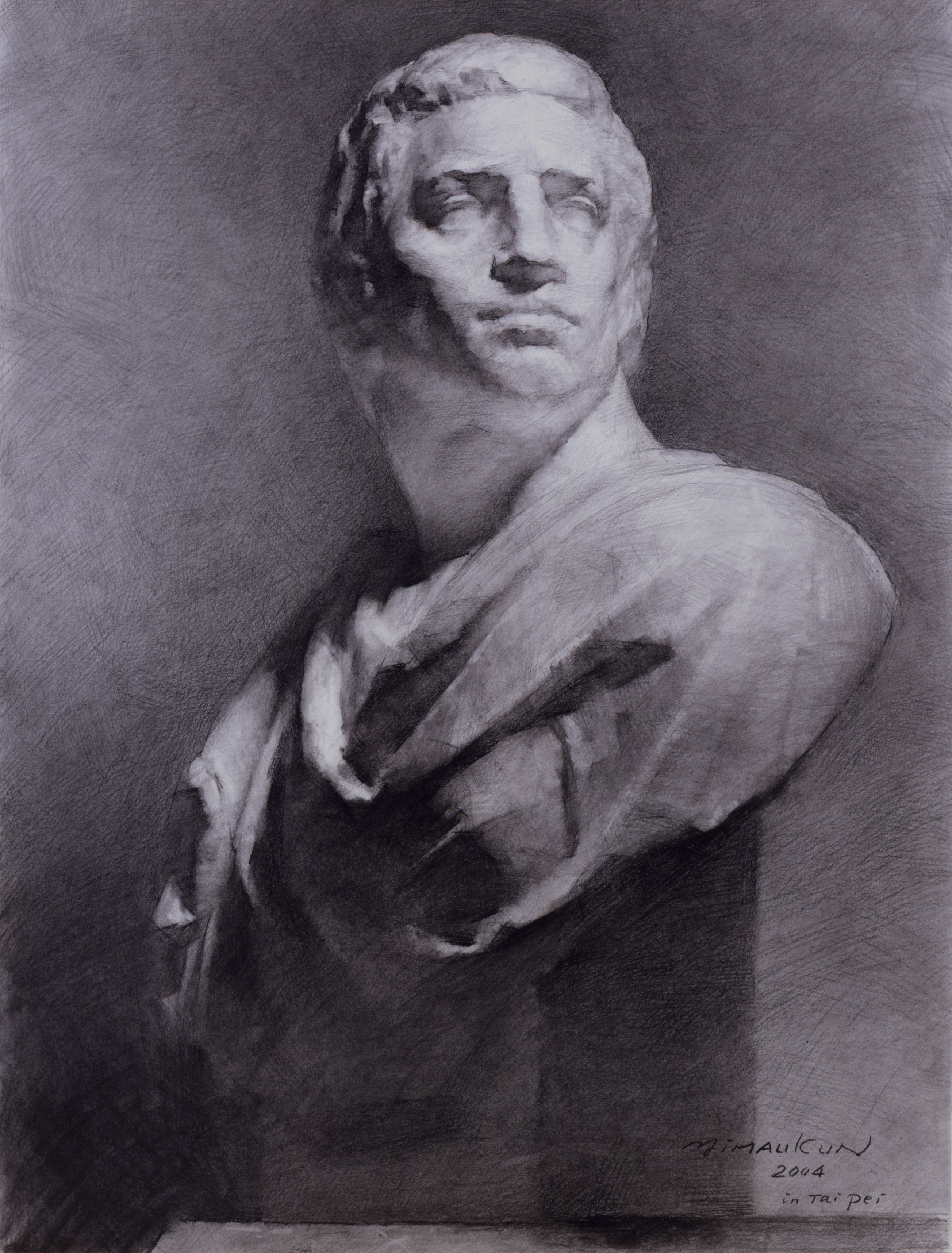
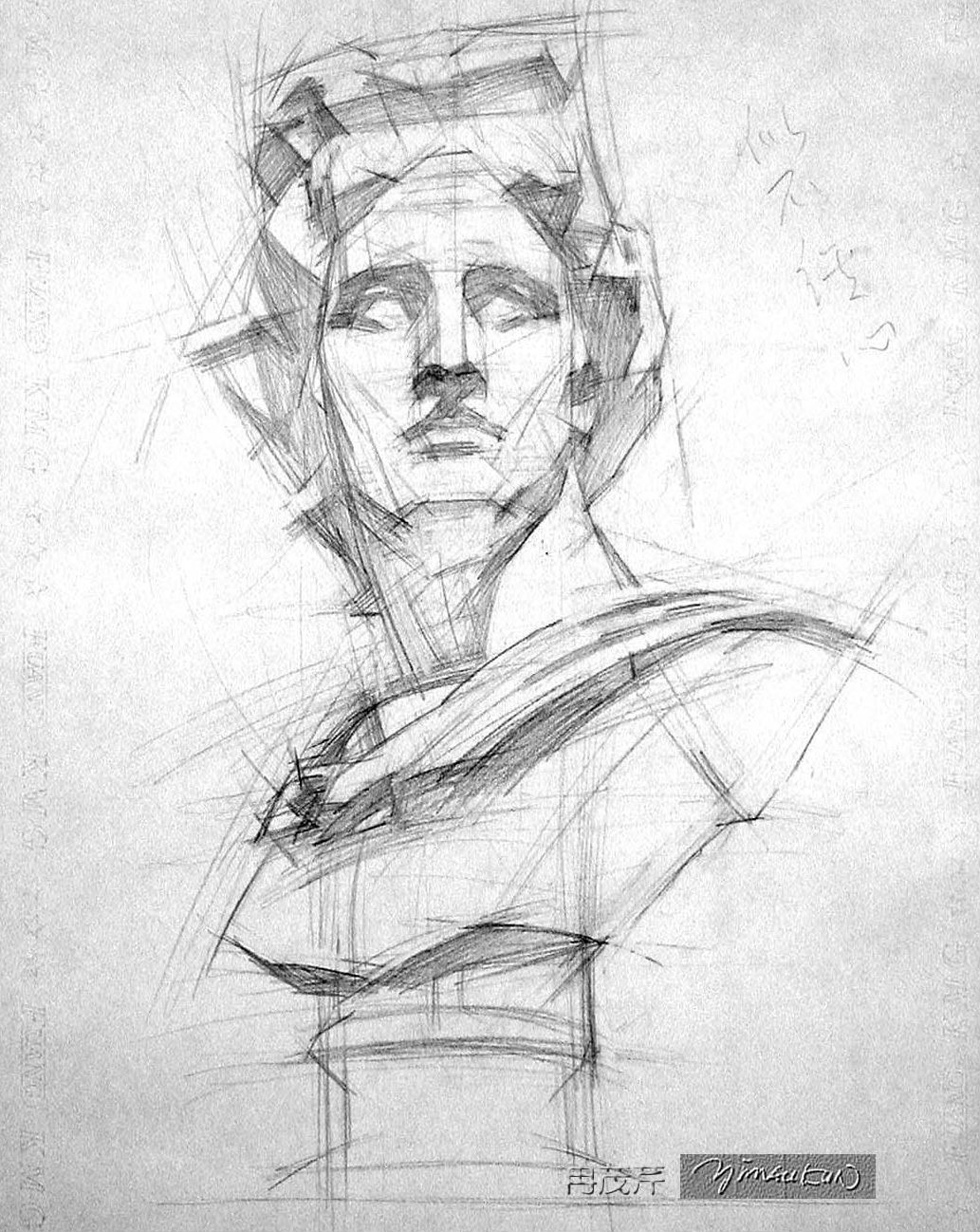
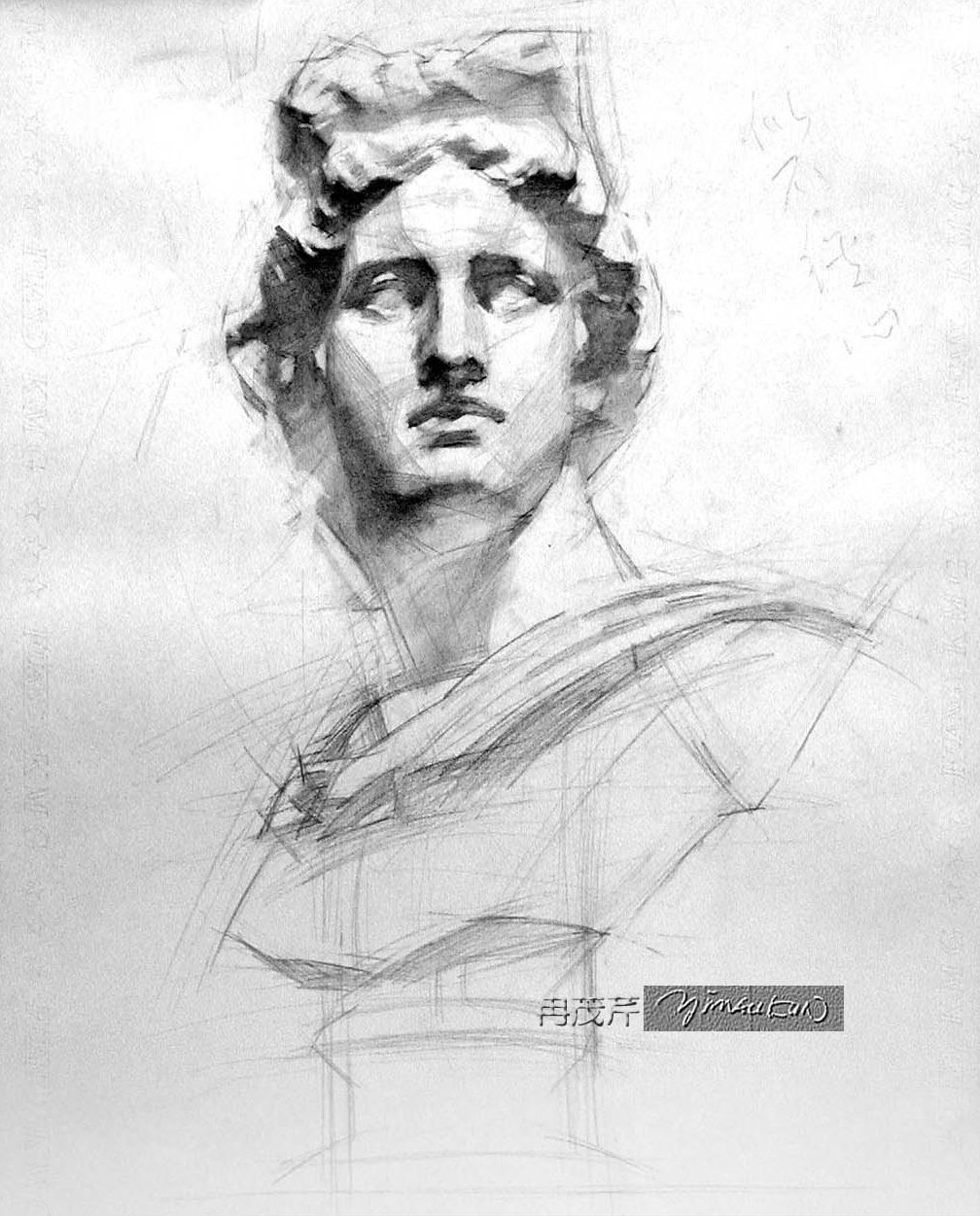
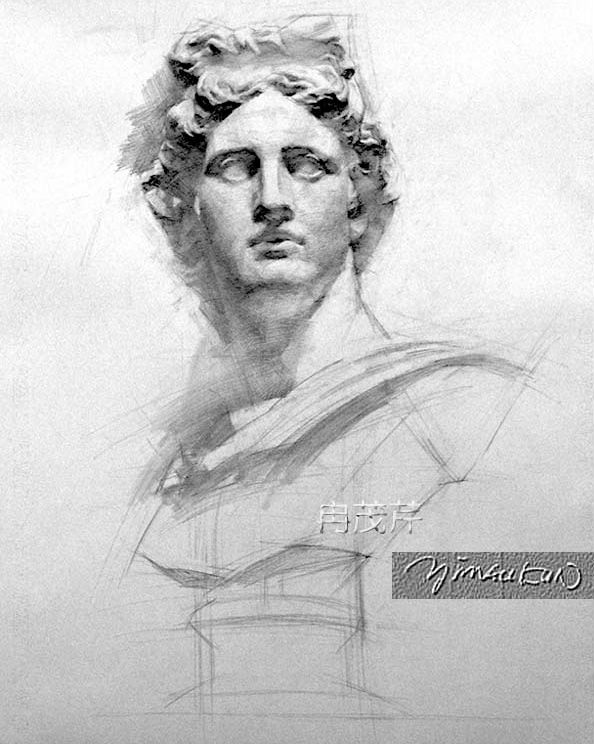
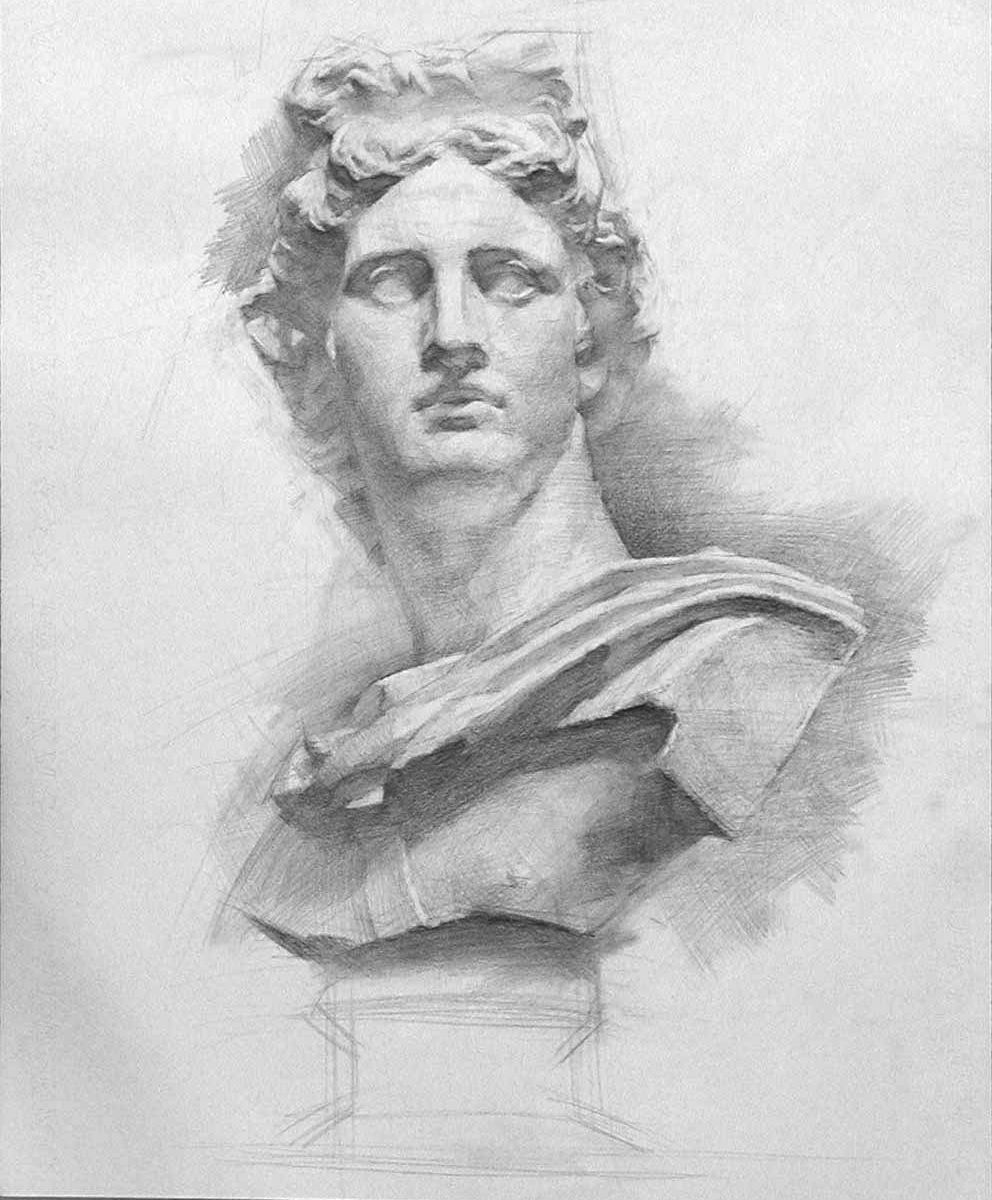
This drawing is a teaching demonstration. It’s a good example of how I seek to build not only the shape but also volume during the block-in stage.
Construct the classical bust on paper using straight lines and conduct planar analysis. Hatch the dark areas using gray. Using gray for dark areas at this point facilitates revisions we can reinforce or eliminate any parts later easily.
Based on the dividing line of the dark and light, reinforce the dark areas and the light areas.
Create details by creating different levels of value. Create another three layers of value in dark, middle and light values respectively. In other words, in the dark value, you need to see and create dark, middle and light value within the dark value. The same goes for the middle and light values.
At this point, the drawing is almost done. Finish the base of the bust and add the backdrop. When it comes to the backdrop, it may or may not fill the paper. If the backdrop fills the paper, it create a sense of space. If it doesn’t fill the paper, it creates a sense of rhythm.
For information about classical bust study drawing video lessons, please click here.
For information about drawing book, please click here.
Want a structured introduction to Yim Mau-Kun's drawing method?
Download the free 5-Step Classical Drawing Method guide.
Send Me the Free Guide