
I Was from the 'Five Black Categories' — and I Still Dared to Seize Guns
His father went to Taiwan in 1949, and Yim carried the stigma of the 'Five Black Categories' — yet the Cultural Revolution still swept him into a rebel faction and through the window of an armory. Decades later he laughed and asked: what was I thinking?
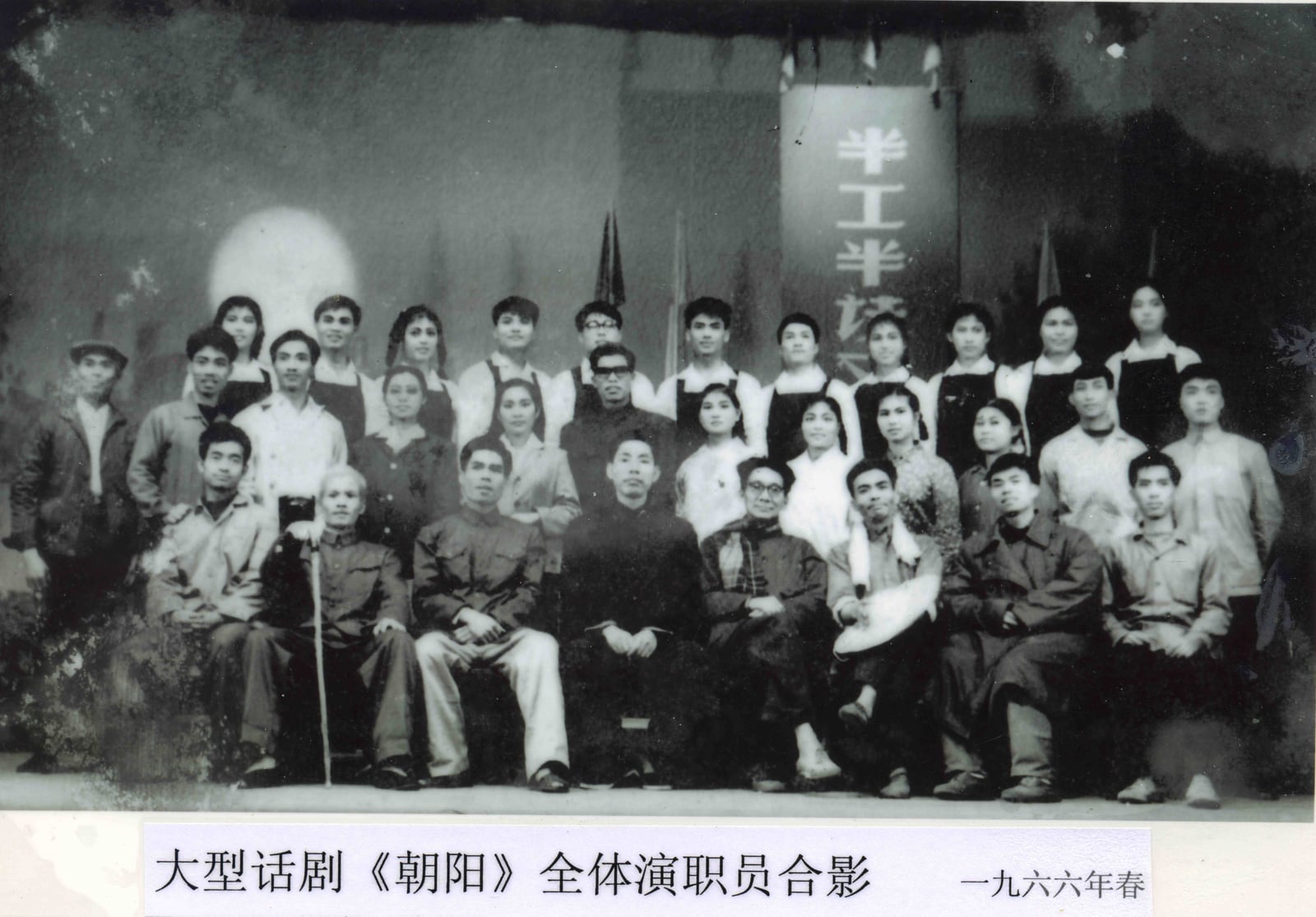
Many years have passed. Some dates have blurred, and some names take time to retrieve from memory.
But for Yim Mau-Kun, certain images never disappeared.
A large classroom.
A group of people labeled "ox-demons and snake-spirits."
A commandeered public bus.
An armory.
Wet mud and banana trees below the window when he jumped out.
A floor paved with patterned cement tiles.
A gunshot.
A man falling to the ground.
For him, the Cultural Revolution was not simply a political movement in a history book.
It was a period he actually lived through.
And even before that political storm began, he already carried a deeply disadvantageous political identity.
Yim Mau-Kun's father, Ran Peng, had served as a civilian official in the Nationalist government and went to Taiwan in 1949. His father's political background, combined with the fact that he was living in Taiwan, placed the son who remained on the mainland under the deeply stigmatized family background associated with the "Five Black Categories."
It was not a choice Mau-Kun had made, yet it became a political mark he could not escape in his youth.
That was why, decades later, when he remembered that he had actually joined a rebel faction during the Cultural Revolution — and had even been swept into the seizure of weapons from an armory — he could not help laughing at himself:
What on earth was I thinking? I was from the Five Black Categories, and I still dared to go seize guns.
The self-mockery in that line captures something about those years that is difficult to explain simply.
He came from a politically suspect family, yet he also participated in the Red Flag faction.
He joined the rebellion, and later the rebellion turned around and purged him.
He once stood in the crowd; later he wore a black placard and marched in a denunciation procession.
And before all of this, Yim Mau-Kun had simply been an art worker in a traditional opera troupe.
A Family Background He Could Not Choose
To understand Yim Mau-Kun's position during the Cultural Revolution, one must first understand his family background.
His father, Ran Peng, had served as a civilian official in the Nationalist government and went to Taiwan in 1949.
Mau-Kun remained on the mainland.
In the years that followed, when class status, family background, and political history were given enormous weight, having a father who had served in the Nationalist government and was living in Taiwan could place a son who remained on the mainland under prolonged political pressure.
Who your father was, what work he had done, which side he had been on in 1949, and even where he had gone could affect the next generation's schooling, employment, and political treatment.
Yim Mau-Kun therefore carried a deeply unfavorable "Five Black Categories" family background.
This political stigma did not suddenly appear when the Cultural Revolution began.
It had existed before the Cultural Revolution.
So his later story was not that of a young man with a politically safe background who first joined the rebel movement and was only afterward branded a "bad element."
Quite the opposite.
From the beginning, Mau-Kun knew that his family background was a problem.
Yet when the Cultural Revolution swept across society, he, like countless people around him, was drawn into the political movement.
The Barber in the "Cowshed"
During the Cultural Revolution, Yim Mau-Kun spent a period of time in collective detention.
He remembered it as a very large classroom.
Places like this were then commonly called "cowsheds" or "cattle pens."
All kinds of people were being held there.
Cadres. Intellectuals. Doctors.
And people collectively denounced in the political language of the time as "ox-demons and snake-spirits."
One doctor died by suicide.
Mau-Kun remembered the doctor's two sons coming to collect the few belongings their father had left behind.
There was not much to say.
They simply took the belongings away.
In those years, events that should have been shocking gradually seemed to become part of ordinary life.
Someone would be taken away.
Someone would suddenly disappear.
Family members would come to collect what was left.
No one knew who might be next.
After roughly a month of confinement, most of the people inside were disheveled and filthy.
Mau-Kun used a Cantonese expression — "wu li ba zha" — to describe how dirty and unkempt everyone had become, their hair uncut for who knew how long.
Then someone suddenly remembered:
Don't we have an art worker from the opera troupe here?
So they asked Yim Mau-Kun to cut everyone's hair.
The man who normally held a paintbrush and painted stage scenery became the barber of the "cowshed."
After more than a month of detention, those people labeled "ox-demons and snake-spirits" finally received a proper haircut — from him.
Years later, he could still laugh when he remembered it:
I was a barber then, too.
But in retrospect, it was more than a curious little episode.
Even in a period of extreme disorder, people instinctively tried to preserve some trace of ordinary life.
Taking a bath. Putting on clean clothes. Getting a haircut.
Things that were normally unremarkable could become rare moments of normalcy in such an environment.
From Yim Mau-Kun to "Ran Zhu"
As the political movement intensified, Zhaoqing gradually split into rival political factions.
In Mau-Kun's memory, the two principal groups were the Red Flag faction and the East Wind faction.
He joined the Red Flag faction.
That created a contradiction that even he found difficult to understand later in life:
a man burdened by the deeply unfavorable family background of the "Five Black Categories" had nevertheless thrown himself into a militant rebel movement.
The surviving oral history does not provide a simple, definitive explanation for why he joined the Red Flag faction.
After sixty years, perhaps even he could no longer fully explain it.
What is clear is that politics had entered every corner of daily life.
It even entered people's names.
During the Cultural Revolution, many people gave themselves new names that sounded more "revolutionary."
Mau-Kun did the same.
At the time, he greatly admired Tao Zhu, a senior political figure who had long held important posts in Guangdong and briefly rose to the central leadership early in the Cultural Revolution.
So Yim Mau-Kun changed his name to:
Ran Zhu.
The character Zhu was the same as the Zhu in Tao Zhu's name.
People who knew him began calling him "Ah Zhu."
Today it may seem difficult to understand an adult changing his name because of a political tide.
But at the time, politics did not exist only in Beijing or in newspapers.
It was in your workplace. Among your friends. In the faction you belonged to. In the slogans you shouted. Even in the name you used.
Almost no one could remain truly outside it.
"Old Ran, They're Seizing Guns!"
As armed clashes between the two Zhaoqing factions escalated, both sides began fighting over important buildings and high ground.
Taller buildings, government offices, and other strategic sites were occupied by opposing groups.
Then the conflict escalated further — to the seizure of guns.
That day, Yim Mau-Kun was exhausted.
He returned to the opera troupe dormitory and wanted to lie down for a while.
There was constant noise outside.
He thought: What are they making a fuss about now?
He shut the door and tried to ignore it.
Not long afterward, the door suddenly burst open.
Someone rushed in and shouted:
Old Ran! They're seizing guns! They're seizing guns!
Before he fully understood what was happening, he was pulled out of the dormitory.
A public bus was already waiting outside.
In those years, when rebel groups needed transportation, public buses could simply be commandeered for use.
A group of people pulled him aboard.
The bus crossed Zhaoqing, passed the main streets and department store, and headed toward the Seven Star Archway.
Continuing west, Mau-Kun soon saw an unusual scene.
The rice fields had already been harvested.
The fields and roadsides were crowded with people.
Many of them were middle-school Red Guards.
People whispered to one another.
Some ran back and forth.
Only then did he understand:
there was an armory ahead.
Someone had already climbed inside.
Pushed Through the Armory Window
The armory stood beside a small hill.
When the local middle-school Red Guards saw Yim Mau-Kun arrive, they seemed to assume immediately that he was someone experienced.
Early in the Cultural Revolution, large numbers of Beijing Red Guards traveled around the country. Some of their leaders became nationally famous, and young people in the provinces often regarded anyone believed to be a "Beijing Red Guard" with special awe.
Mau-Kun's Mandarin accent differed from that of most local Cantonese speakers, and he was then using the name "Ran Zhu." Someone apparently mistook him for a Red Guard who had come south from Beijing.
When they saw him, someone said:
We've been waiting for you!
Mau-Kun was baffled:
Waiting for me to do what?
Two people had already climbed into the armory, but the entrance was difficult to reach.
Several young men gathered around him.
Five or six of them pushed him upward from below.
That was how he was shoved through a window and into the armory.
Inside, he saw two Red Guards already there.
One was tall. The other was shorter.
They were continuously carrying rifles, ammunition, and other military supplies to the window and throwing them outside.
Below the window was a crowd.
Some people grabbed guns. Others grabbed ammunition.
As soon as they got something, they ran toward the roadside to load it onto vehicles and carry it away.
Everything unfolded very quickly.
No one stopped.
Hardly anyone had time to ask:
What would this become in the end?
Decades later, when he told the story again, Mau-Kun could not help laughing at himself.
He asked:
What on earth was I thinking? I was from the Five Black Categories, and I still dared to go seize guns.
It sounds like a joke at the expense of his younger self.
But behind the laughter is a difficult question.
He was not a young man from a politically "red" and secure background who assumed he would be safe no matter what he did.
Quite the opposite.
His father had served as a civilian official in the Nationalist government and was living in Taiwan.
Mau-Kun knew very well that this was a highly sensitive family background.
Yet in the political tide that engulfed everything, he joined the Red Flag faction.
Then, on an afternoon when he had only gone back to the dormitory to sleep, he was called out of bed, dragged onto a public bus, and physically pushed by five or six young men through the window of an armory.
One step followed another.
Until he was already standing inside.
At that moment, he had no opportunity to stand outside history and analyze himself.
History had already swept him in.
Jumping from the Window into the Mud
Before long, the two people inside the armory suddenly shouted:
They're coming! They're coming!
Someone with a key was entering through the main door.
In Mau-Kun's memory, it was a military officer.
Whether the man was a company commander or a battalion commander, he could no longer remember.
He had come to arrest them.
The three people inside had no other way out.
They ran for the window.
One after another, they jumped.
There was no dry ground below.
Banana trees grew beside the building.
It had rained a few days earlier.
The ground was thick with mud.
All three landed directly in it.
The soldiers rushed over to seize them.
But the Red Guards below surged forward as well.
The crowd and the soldiers struggled over the men.
In the confusion, Mau-Kun and the others were pulled away.
He ran from the site covered in mud.
At the time, he did not know that this episode of "seizing guns" would later become the most serious and concrete political charge against him during the Cultural Revolution.
"Seizing Guns" Became a New Charge, but the Old Label Never Disappeared
The political winds shifted again.
During the campaign to "Cleanse the Class Ranks," many people had their political activities from earlier phases of the Cultural Revolution reopened and investigated.
For Yim Mau-Kun, "seizing guns" became the most direct charge against him.
He was labeled a "black gang element."
He wore a black placard. He was paraded through the streets. He was subjected to struggle sessions.
After returning to the opera troupe, he was again detained together with others who were classified as coming from the "Five Black Categories" or denounced as "ox-demons and snake-spirits."
Men and women were all confined in one large room.
At first there were daily denunciations. Mass struggle sessions. Public parades through the streets.
Later, when there were fewer denunciations and parades, they were sent out to labor.
Pulling handcarts. Hauling mud. Hauling earth.
If rice was needed for cooking, they transported rice.
People who had been overthrown from different institutions in the local cultural and public-service system — hospitals, cinemas, bookstores, the opera troupe, and others — were sometimes brought together for collective denunciation meetings.
Only months earlier, Mau-Kun had been participating in the Red Flag faction's rebel movement.
Now he stood on the side being denounced.
But one distinction is important.
Yim Mau-Kun did not acquire a politically unfavorable status for the first time during the "Cleanse the Class Ranks" campaign.
His stigmatized family background had existed all along.
His father's service in the Nationalist government and move to Taiwan remained an inescapable part of his political dossier.
The charge of "seizing guns" did not replace that family history.
It added a new accusation based on something he himself had done to a background that was already deeply unfavorable.
On one side was the father and family history he could not choose.
On the other was something he had actually done during the Cultural Revolution.
The two were layered on top of each other.
That was also why, decades later, he would laugh and ask himself:
I was from the Five Black Categories. How did I still dare to go seize guns?
At Dinghu Mountain, Laboring Beside the "Biggest Capitalist-Roader"
Later, Yim Mau-Kun was sent to Dinghu Mountain.
An agricultural school near Dinghu Mountain had been emptied and turned into a detention site for people in the Zhaoqing region who had been branded "ox-demons and snake-spirits."
Mau-Kun was sent there as well.
The main activity was labor.
He remembered that Chen Jia, the Party secretary of the Zhaoqing region, was among those detained with them.
In the political language of the time, Chen Jia was called the biggest "capitalist-roader" in the Zhaoqing region.
He had once been one of the region's highest-ranking officials.
Now he, too, labored alongside the other people who had been overthrown.
That dramatic reversal of status left a deep impression on Mau-Kun.
Today you were the secretary. Tomorrow you were a "capitalist-roader."
Today you were a rebel. Tomorrow you were a "black gang element."
And for some people, political identity did not even begin with a particular campaign.
It could begin with family background and remain on their backs for years.
Yim Mau-Kun was one of them.
At Night, No One Knew Where the Bullets Came From
During the most violent period of the factional fighting, Yim Mau-Kun also lived for a time in an old three-story building.
In his memory, the building had once been associated with the Nationalist general Zhang Fakui and resembled a villa.
They lived on the third floor.
Outside was a corridor.
At night, if the lights were on, anyone walking through the corridor could be seen clearly from outside.
And at that time, random shots were often fired at night.
"Bang!"
No one knew where the bullet had come from.
No one knew who the next shot was aimed at.
Mau-Kun and the others decided it was too dangerous, so they removed the room doors.
They used the door panels to block the corridor, creating a crude barricade.
At least when people moved around inside, they were no longer completely exposed.
Living with them was a demobilized soldier.
He was tall and handsome.
Mau-Kun had even joked with him:
With looks like yours, you could be an actor.
One night, scattered gunfire again sounded outside.
The former soldier lay down and peered through a triangular gap formed where two door panels crossed.
The others immediately thought it was dangerous.
They shouted at him:
Don't look! Get back!
They had barely finished speaking —
Bang!
Mau-Kun saw blood burst from the man's head.
His body jerked upright.
Like a spring.
Then he collapsed.
He rolled over and lay face down on the floor.
Decades later, Yim Mau-Kun still remembered that floor.
It was covered in the patterned cement tiles common in old Guangdong buildings.
There was blood on them.
Taking the Wounded Man to the Hospital on a Freight Handcart
People downstairs heard the shot and rushed up.
They carried the wounded man to the ground floor.
First, they laid him on a large ping-pong table.
They bandaged him as best they could.
There was no ambulance available to call.
What they found instead was a two-wheeled handcart normally used to haul goods.
Two wheels. Two handles in front.
The wounded man lay on top.
A group of people pulled the cart toward the hospital.
They took him for treatment at Gaoyao County Hospital and the regional hospital.
In the end, they could not save him.
The day before, he had still been talking with them.
Only moments earlier, Mau-Kun had joked that he was handsome enough to be an actor.
After a single gunshot, he was gone.
Shouting "Long Live Chairman Mao" While Being Shot
Yim Mau-Kun remembered another armed clash as well.
At the time, the Red Flag faction occupied a regional guesthouse.
The building was surrounded by a wall.
At night, people inside had to stand guard.
Some middle-school Red Guards came to help.
Late one night, members of the opposing faction climbed over the wall from outside.
Among them were former soldiers. They had military experience. They knew how to use guns. They also knew how to approach an opposing position.
The young Red Guards on the Red Flag side were hiding near a flower bed.
The two sides suddenly encountered each other.
Gunfire broke out immediately.
One young Red Guard fired while shouting:
Long live Chairman Mao!
Long live Chairman Mao!
He hit a former soldier on the other side.
He himself was also shot several times.
Again, the wounded were carried on one of those two-wheeled handcarts.
A doctor at the scene helped with emergency treatment.
Everyone pulled the cart through the night toward the hospital.
The former soldier did not survive.
The young Red Guard who had been shot did.
He was later sent to Guangzhou for further treatment.
Yim Mau-Kun saw him again years afterward.
In those years, the distance between life and death could be only a few centimeters, the movement of lowering one's head, or the direction from which a bullet happened to come.
A Painter Often Remembers in Images
Many years later, when Yim Mau-Kun spoke again about the Cultural Revolution, what came back first was often not the grand political terminology.
It was a series of very specific images.
People in the "cowshed" who had gone a month without a haircut.
A pair of scissors used to cut the hair of the so-called "ox-demons and snake-spirits."
A public bus commandeered by a rebel faction.
Harvested rice fields crowded with middle-school students.
A window in an armory.
Rifles being thrown out one after another.
Banana trees beneath the window.
Mud after the rain.
The black placard hanging from his chest.
Handcarts used to haul mud, rice — and wounded people.
Dinghu Mountain.
Gunshots at night from places no one could see.
And blood on patterned cement tiles.
Perhaps it was because he was, in the end, a painter.
His memories often remained in the form of images.
Faces. Light. Movement.
The posture of a man just before he fell after being shot.
The shape of a room.
The pattern of a floor tile.
Many of the political slogans people shouted in those years he could no longer necessarily remember in full.
But that gunshot — he remembered.