
Lin Fengsu: The Years We Talked About Painting in Zhaoqing
A small 1976 oil portrait holds the closest years of two painters' friendship in Zhaoqing — and more stories than could ever be finished.
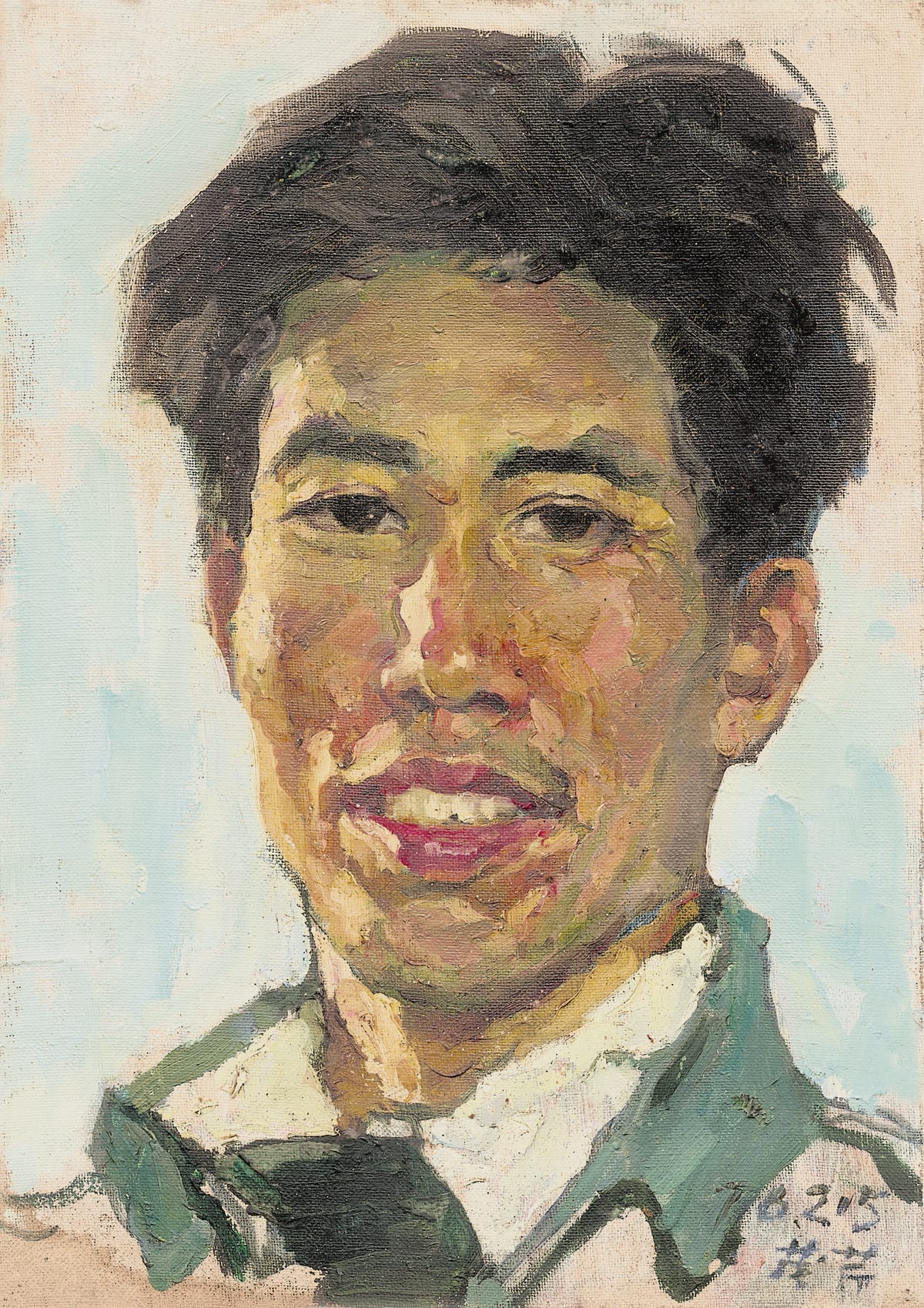
In 1976, Yim Mau-Kun painted a small oil portrait of his friend, the Chinese painter Lin Fengsu.
The portrait is direct and informal. Lin is still young, looking toward the viewer with an easy, natural expression. Decades later, when Yim saw the painting again, he was struck by how immediate it still felt.
He wrote:
Lin Fengsu and I have more stories than I could ever finish telling.
Their friendship had begun many years earlier at the Guangzhou Academy of Fine Arts.
From the Academy to Zhaoqing
Lin Fengsu was from Jieyang in Guangdong's Chaoshan region and grew up in a farming family.
A school art teacher recognized his talent and strongly encouraged him to apply to the Guangzhou Academy of Fine Arts.
That was where he and Yim Mau-Kun first became friends.
The academy was still small in those years. There were only a few hundred teachers and students, and students in different years knew one another well. Yim remembered the atmosphere as academically serious but also close-knit. Older and younger students mixed easily, and conversations about painting extended well beyond the classroom.
After graduation, their paths separated for a time.
Yim worked in Zhaoqing.
Lin was assigned to Huaiji County, a mountainous area within the Zhaoqing region.
But they remained close.
“He Loved Fish”
When Yim later wrote about Lin, he did not begin with an exhibition or an important painting.
He remembered fish.
Lin loved to eat fish.
But Huaiji was mountainous, and in those years fresh fish was not easy to find there. Zhaoqing was different. With its ponds and the West River nearby, fish was much more plentiful.
Whenever Lin traveled to Guangzhou for meetings, he would often stop in Zhaoqing on his way back to Huaiji.
He would call ahead and tell Yim roughly when he would arrive.
Yim would go to the market.
He would choose a large, fresh fish, buy some vegetables, and have dinner ready by the time his friend arrived.
He later remembered simply watching Lin eat with a smile.
For Yim, that was one of the pleasures of friendship.
Not a formal occasion.
Just knowing what a friend liked, cooking it for him, and waiting for him to arrive.
A Small Circle Devoted to Art
By the later years of the Cultural Revolution, literary and artistic activity was gradually beginning to revive.
Lin was transferred from Huaiji to work in Zhaoqing.
For a period, the small city became home to more than a dozen graduates of the Guangzhou Academy of Fine Arts and its affiliated school.
Each had his or her own strengths, but in Yim's recollection, Lin's influence was especially strong.
Earlier in the 1970s, Lin had already attracted considerable attention when two of his works, Shigu New Fields and Commune Holiday, were selected for a major national art exhibition.
But for Yim, Lin's importance was not only professional.
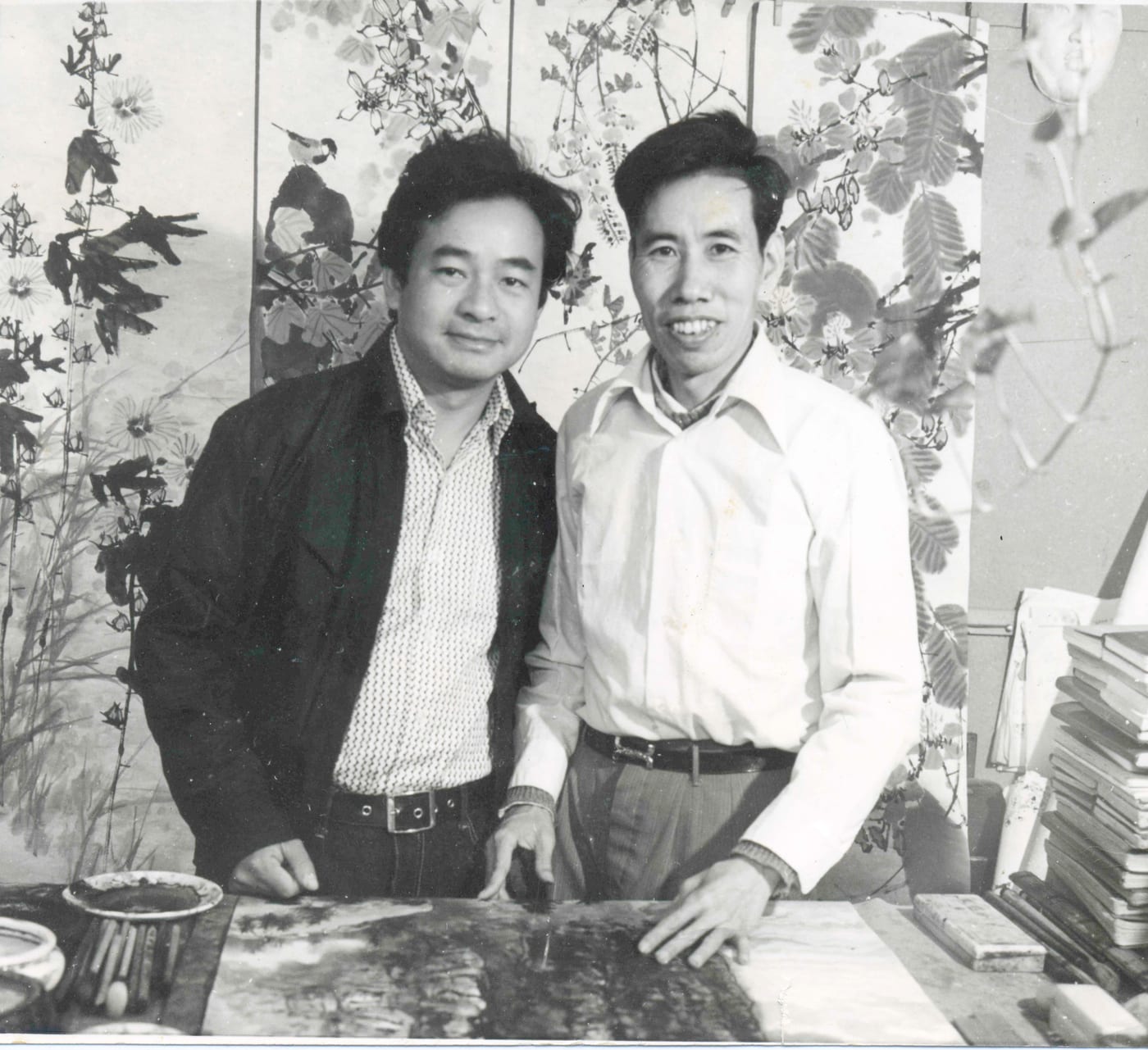
Once Lin moved to Zhaoqing, the two families lived extremely close to one another.
Lin and his family occupied the small building just below Yim's quarters.
Yim described it as a relationship in which they could simply call up or down to one another.
After work, they would gather in Lin's small sitting room.
Drink tea.
Talk.
Almost always about painting.
Current work.
Art history.
Painters they admired.
People in the art world.
Yim later emphasized that there was very little conversation about politics or romantic gossip.
The subject was art.
Sometimes the conversation would immediately turn into work.
Paper would be spread out.
Ink ground.
Brushes picked up.
And someone would start painting.
Without planning it, they had formed a small circle centered almost entirely on art.
The 1976 Portrait
It was during those Zhaoqing years that Yim painted the portrait of Lin Fengsu.
The painting is modest in scale—only 38 by 30 centimeters.
There is no elaborate setting and no attempt at a formal public image.
The attention is on the face.
The dark hair.
The eyes.
The shifting warm and cool tones of the skin.
The slight smile.
Years later, Yim described the portrait as having saturated color, fluent brushwork, and a genuine expression.
When he saw it again after decades, he was startled by its likeness.
He remembered that the other painter friends around them had been excited when he first finished it.
Everyone recognized Lin immediately.
In a sense, the portrait records more than Lin's appearance.
It records a period when the two painters were seeing each other almost every day.
They Watched Each Other Develop as Artists
Their friendship also unfolded during an important period in both men's artistic lives.
They were not simply old classmates who occasionally met.
They were working artists developing side by side, looking at one another's work and exchanging ideas.
Lin was gaining recognition for his Chinese landscape painting.
Yim continued working in oil, drawing, figure painting, and large-scale compositions.
They saw one another's successes, frustrations, experiments, and unfinished ideas.
A work could be shown to a friend before anyone else saw it.
A question about composition or brushwork could become an evening-long conversation.
For Yim, this was one of the defining features of their friendship.
Art was not an occasional subject between them.
It was the language of the friendship itself.
Leaving Song of the Warrior with Lin
In 1978, Yim's life changed abruptly.
His father died in Taiwan.
Yim left Zhaoqing and eventually went to Hong Kong to deal with family matters.
Before leaving, he had to decide what to do with an important early oil painting: Song of the Warrior.
He entrusted it to Lin Fengsu for safekeeping.
In his memoir, Yim mentioned this almost in passing.
But the gesture says a great deal.
You do not leave an important painting with just anyone.
You leave it with someone you trust.
The Lost White Plum Blossoms
Another painting carried a more personal history.
When Yim married, Lin gave him a painting of white plum blossoms as a wedding gift.
But while Yim and his wife were traveling by train, the luggage was lost at the station.
The painting disappeared with it.
Yim later told Lin what had happened.
He assumed the story ended there.
Lin did not.
He remembered.
Many years later, Lin painted another White Plum Blossoms for him.
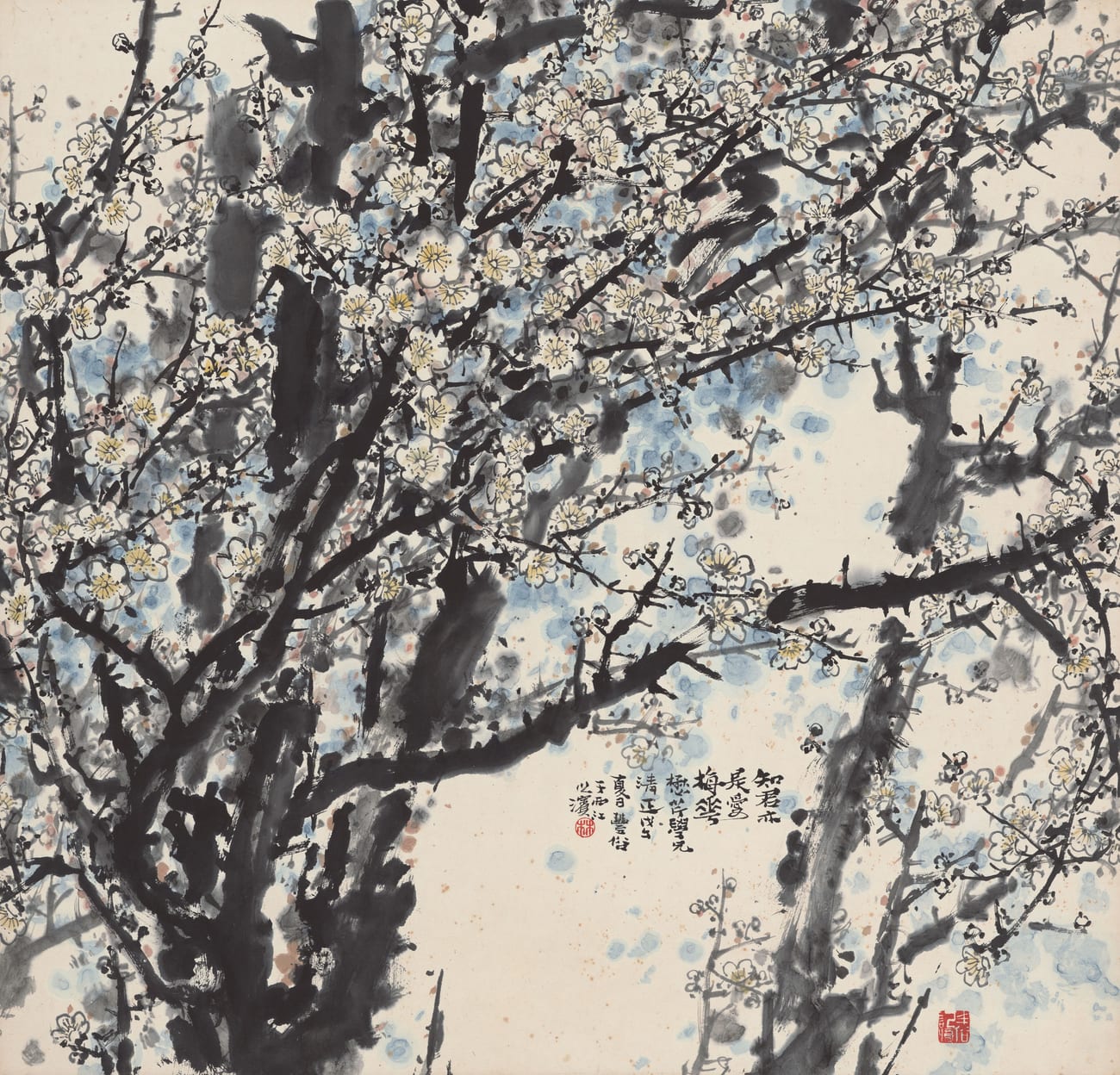
It was not simply another plum painting.
It replaced a gift that had disappeared decades earlier.
That small act stayed with Yim.
Decades Later, the Portrait Returned
Much later, Lin became ill.
One day, his daughter and son came to Yim's home.
They brought with them the oil portrait from 1976.
The young Lin Fengsu appeared again before him.
Yim wrote of his reaction with unmistakable affection:
My dear Fengsu—what year did I paint this? It really looked so much like him.
Lin had asked his children to bring the portrait back so that Yim could see it once more.
But they had brought more.
From their luggage they took out several of Lin's paintings.
The Three Gorges.
Moonlight over the Great Wall.
And White Plum Blossoms.
Yim understood the meaning immediately.
The white plum painting recalled the wedding gift that had been lost so many years before.
The other two were works Lin himself was proud of.
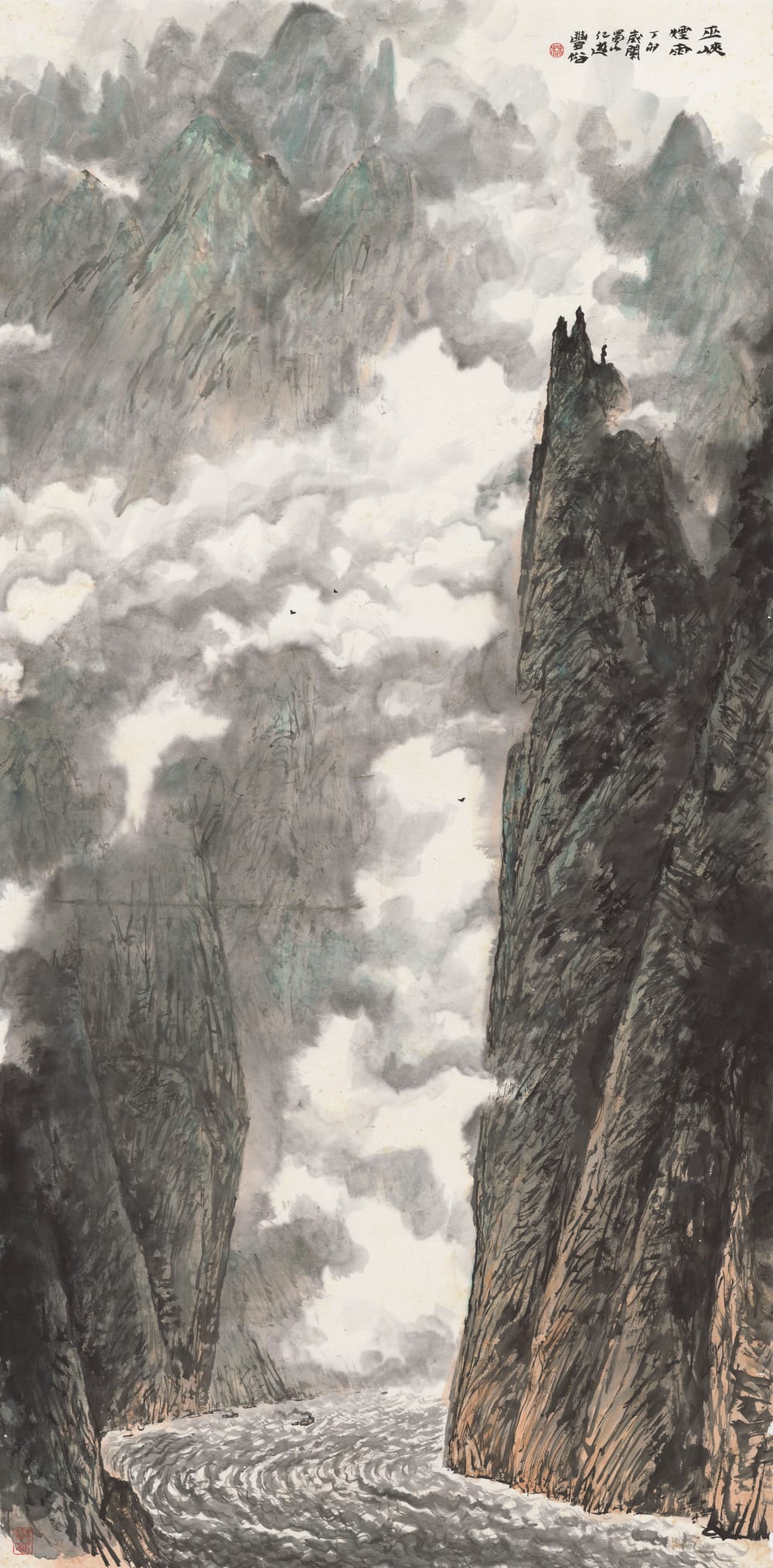
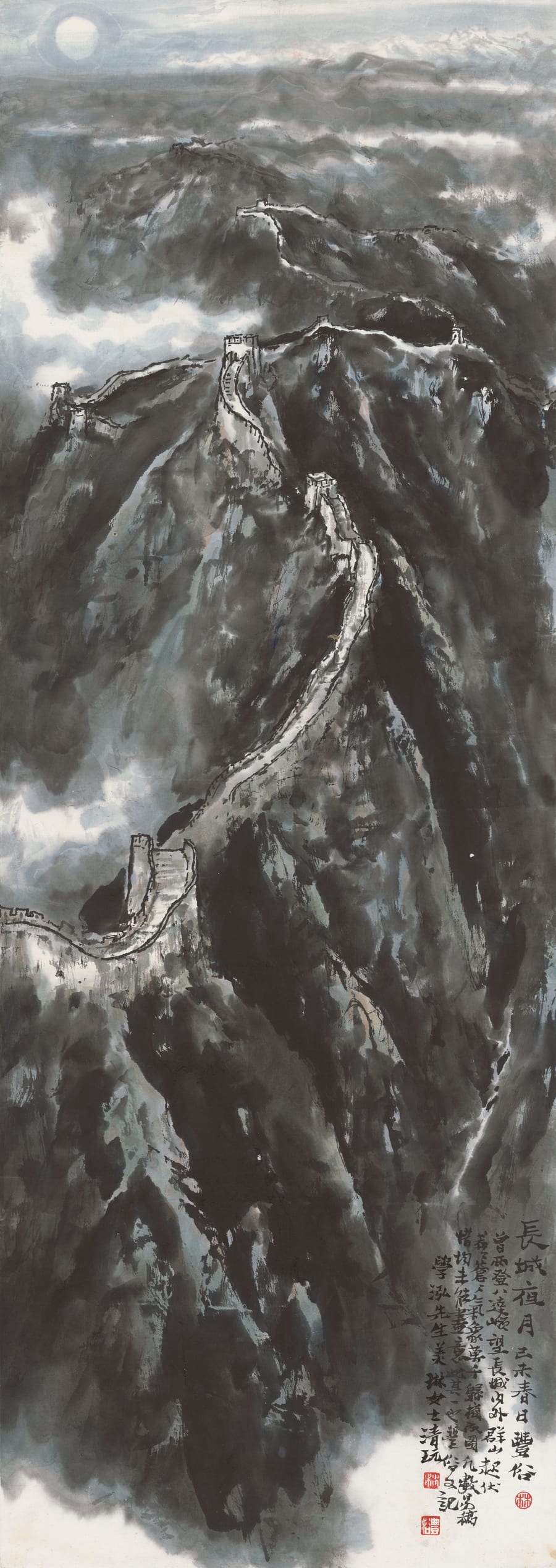
These were not simply paintings being transferred from one household to another.
They were part of a friendship stretching back to the academy, through Huaiji and Zhaoqing, through careers, families, separations, and decades of painting.
“Lin Fengsu and I Have More Stories Than I Could Ever Finish Telling”
From the perspective of art history, there are many ways to write about Lin Fengsu.
One can discuss his landscape paintings.
His major works.
His place in modern Chinese painting.
His influence.
But that is not primarily how Yim Mau-Kun remembered him.
He remembered a classmate from the academy.
A friend traveling back from Guangzhou who would call ahead to say when he was arriving.
A man who loved fish.
A neighbor downstairs whose sitting room became a place for tea, conversation, ink, and brushes.
A fellow painter with whom almost every conversation eventually returned to art.
A friend trusted enough to keep Song of the Warrior when Yim left Zhaoqing.
And a man who remembered, decades later, that a wedding gift of white plum blossoms had once been lost.
The small portrait painted in 1976 therefore preserves more than the face of a young Lin Fengsu.
It preserves a particular period in the lives of two painters, when they lived only a few steps apart and could spend evening after evening talking about art.
Years later, when Yim began to write about his friend, he did not start with biography or art history.
He began with one sentence:
Lin Fengsu and I have more stories than I could ever finish telling.