
“He’s Still Just a Child”: How One Sentence from Hu Yichuan Changed Yim Mau-Kun’s Life
First in his exam district, yet nearly rejected over his family background. Hu Yichuan looked at the photo and said, 'He’s still just a child.' One sentence opened the door to Yim Mau-Kun’s life in art.
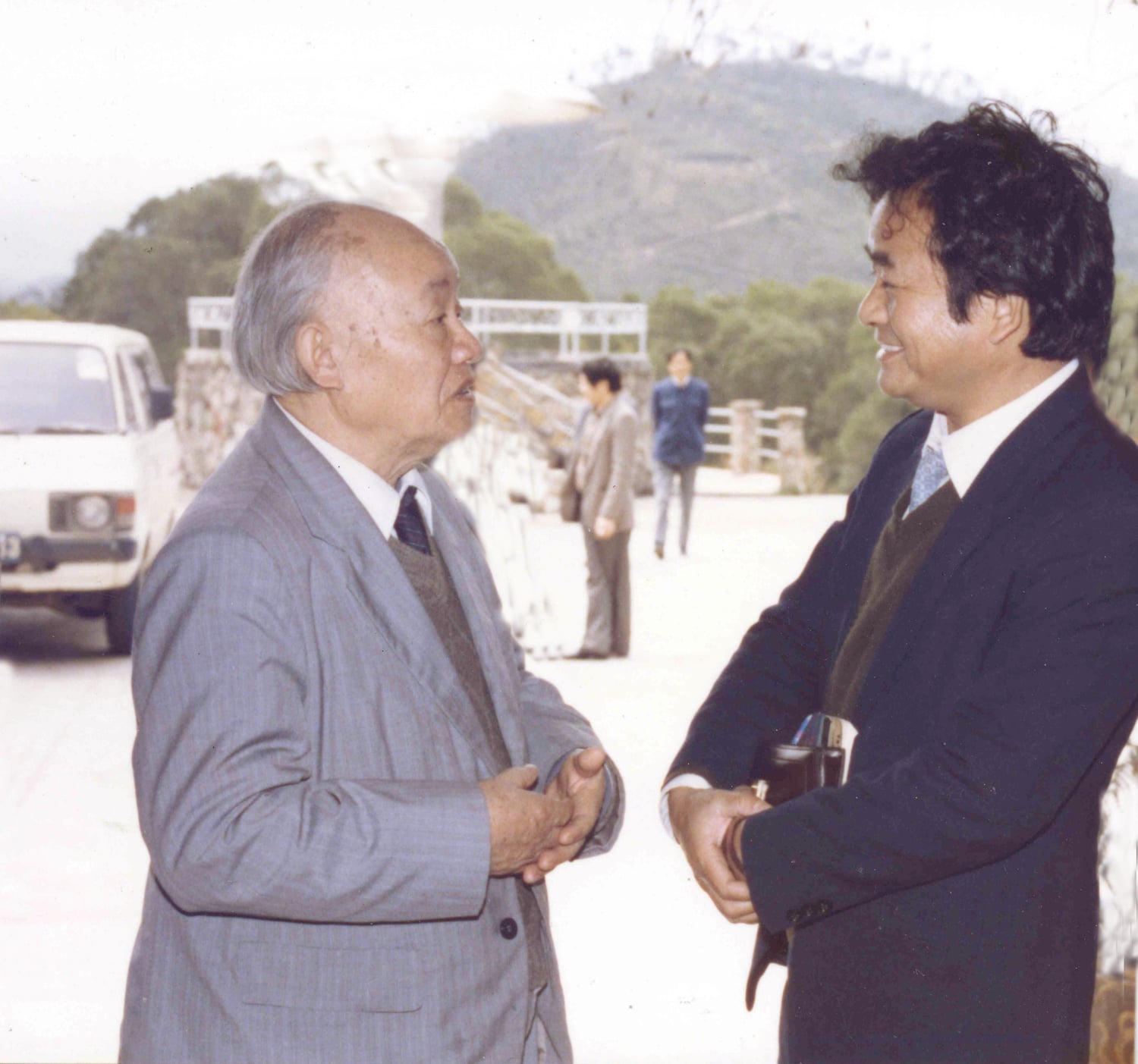
At the time he graduated from Changde No. 1 Middle School, Yim Mau-Kun stood for the first time at a true crossroads in his artistic life.
Until then, drawing had always been with him.
At Lieshi Street Elementary School, Liu Jiazhen had taught him pencil still life. He had drawn Going to Winter School. At Changde No. 1 Middle School, he joined the art group. Zhou Xinzhong taught him watercolor and still life, and gave him the advice that would remain important to his later drawing practice:
Use the eraser skillfully.
He painted Pushing the Cart. His mother used her modest teacher's salary to buy him brushes, ink, and xuan paper.
But even then, drawing was still simply something he loved very much. He did not yet know whether he could truly become a professional artist.
Then an application form, mailed back to Changde from Guangzhou, appeared in front of him.
From Changde to Changsha
By then, some older students from Changde No. 1 Middle School had already entered professional art education.
Yim remembered two names:
Yang Yao.
Gui Tikan.
They had entered the art-school system in Guangzhou before him. For the younger students in Changde No. 1 Middle School's art group, that mattered because they proved something very simple: a child from Changde could leave home and study art professionally.
Yim remembered that the older students mailed application forms back from Guangzhou. The affiliated secondary school of the Guangzhou Academy of Fine Arts was holding entrance examinations in several central-southern provinces, with the Hunan examination site in Changsha.
Yim received an application form. His classmate He Shengshan wanted to apply too.
The two were both students in Class 37 at Changde No. 1 Middle School, and both belonged to the art group.
So they went to Changsha together.
For two teenagers from Changde, this was more than a trip to another city for an examination. It may have been the first time they had to answer a real question about their future:
Could drawing become a life?
He Shengshan
He Shengshan and Yim Mau-Kun were close friends.
They attended the same middle school in Changde, were in the same class, liked drawing, and belonged to the same art group.
Later, they were both admitted to the affiliated secondary school.
Their lives then took different directions. He Shengshan went into stage design and worked for the Guangzhou Acrobatic Troupe.
Many years later, when Yim's family was preparing to leave the mainland for Hong Kong, they even stayed for a time in the old acrobatic troupe dormitory where He Shengshan lived.
But that was far in the future.
At this point, they were simply two middle-school students traveling from Changde to Changsha to take an examination, with no idea what the result would be.
First Place in the Changsha Examination District
Yim later remembered the examination very clearly, especially one fact:
He ranked first in the Changsha examination district.
He said simply:
I did very well on the exam.
The results were publicly posted.
If grades alone had decided the matter, the path ahead should have been simple.
First place.
Admission.
Go to Guangzhou and study art.
But in the end, whether he could enter the school was not determined only by how well he could draw.
The problem was his family background.
The “Family Background” Behind a Child
When Yim spoke about this late in life, he used a very direct phrase:
My family background was very bad.
He did not mean that his family was poor.
He meant his political family background.
His father, Ran Peng, had gone to Taiwan with the Nationalist government around 1949. His mother remained in Hunan with the children.
As a small child, Yim may only have understood that his father could not come back. By adolescence, however, this was no longer only a private family story.
It affected school admissions.
It entered official files.
And it affected how others judged whether a person was considered suitable for admission.
His examination result said first place.
His family background became another kind of report card.
The Admissions Committee Was Divided
Yim remembered that when the final admissions decision was being reviewed, the committee was divided.
On one side was his examination result: first place in the Changsha district.
On the other was his family background.
Some people believed that background was politically problematic.
And so a student who had ranked first in the examination nearly failed to enter the school at all.
This would not be the last time Yim's family background affected his life. The same shadow would return again and again.
But at that moment, he was only a boy who had just finished middle school. His professional art education had not even begun.
Before he could enter it, others first had to decide whether he should be given the chance.
Li Lin
The person in charge of the Changsha examination district was Li Lin.
Yim still spelled out the name carefully in his later recollections, making sure it was remembered correctly.
According to Yim, Li Lin had earlier worked in cultural and arts activities in the military and later taught at the art academy.
During this admissions process, Li Lin's position was clear: he insisted that Yim should be admitted.
It was not simply that he thought the student had performed well. When disagreement arose in the admissions committee, he continued to argue for him.
Yim remembered one vivid little detail:
Li Lin had already slipped Yim's application photograph into his own pocket, as though waiting for the right moment to use it.
Hu Yichuan Arrived
In the end, someone had to make the decision.
In Yim's recollection, that person was Hu Yichuan, then the head of the Guangzhou Academy of Fine Arts.
Hu first looked at Yim's artwork.
Then he asked:
Do you have a photograph of this student?
Li Lin immediately took the black-and-white application photo from his pocket.
Hu Yichuan looked at it.
The photograph did not show a political file.
It did not show a category called “family background.”
It did not show the student who had ranked first in the Changsha district.
It showed a boy's face.
Hu looked at the photograph and said:
He's still just a child.
That was all.
Yim Mau-Kun was admitted.
“He’s Still Just a Child”
Many years later, Yim still remembered that sentence more clearly than the subjects he had taken on the exam or exactly what he had drawn.
He's still just a child.
It sounds almost casual.
But in the context of that admissions meeting, it carried a very different weight.
The committee had been looking at a family file.
Hu Yichuan looked at a photograph and saw a child.
A boy who had just finished middle school.
Who loved to draw.
Who had ranked first in the examination.
Who wanted to study art.
At least in Yim's memory, the decision was made in that moment.
He Called Hu Yichuan His Benefactor
When Yim spoke about Hu Yichuan late in life, he did not simply say, “He admitted me.”
He used a much stronger word:
President Hu Yichuan was my benefactor.
Why?
Yim explained it himself:
Because of that one sentence… he put me on the road to art.
If he had not been admitted, Yim believed he would probably still have continued drawing.
He would still have loved art.
He might have continued teaching himself.
But that would have been something very different.
His own words were:
I would have taught myself.
And with self-study alone, he said:
It would have been very difficult to reach that level of professional training.
That was how Yim understood the significance of his admission late in life.
The decision did not turn someone who did not draw into someone who did.
He would have kept drawing anyway.
What changed was that he entered the world of professional training.
Self-Study and Professional Training
That distinction mattered deeply to Yim later in life.
In Changde, he had already learned from gifted self-taught artists.
Liu Jiazhen at elementary school had not been professionally trained in art.
Neither had Zhou Xinzhong at Changde No. 1 Middle School.
Both had genuinely influenced him.
Zhou's advice to “use the eraser skillfully” remained part of Yim's mature approach to drawing.
So Yim never believed that a person could not make art without an academy.
But he also understood what systematic professional training could provide:
long hours of drawing from observation,
form,
proportion,
structure,
the human figure,
color,
classmates who were all studying art,
and teachers who continuously corrected and criticized the work.
These were not things a teenager working alone in Changde could easily obtain.
That is why, looking back, Yim was so certain that if he had not entered the school, his artistic path would have been different.
Another Life Began with a Black-and-White Photograph
After receiving the admission notice, Yim Mau-Kun had to leave Hunan.
It was not the first move of his childhood.
His early life had already been shaped by movement.
His father went to Taiwan.
His mother took him to Taoyuan.
Shigutan.
Back to Changde.
Ganlu Temple.
Lieshi Street Elementary School.
Changde No. 1 Middle School.
But those earlier moves had largely been decided for him by history and family circumstances.
This time was different.
This time, he was leaving Hunan because of art.
For the first time, his life was moving away from home in a direction he had chosen for himself.
Hunan Behind Him
Guangzhou would bring an entirely different world.
A new city.
New classmates.
Professional art courses.
Later there would be stage-design training, graduation, and an assignment to work in Zhaoqing.
Then the Cantonese opera troupe.
The Cultural Revolution.
Hong Kong.
Taiwan.
Those belong to the next chapter.
If one were to choose an ending for Yim Mau-Kun's youth in Hunan, this moment is fitting.
A child who had once worked in the rice fields at Shigutan, caught fish, operated waterwheels, and saved a braised egg to take home to his mother had grown into a boy who studied art at Lieshi Street Elementary School, painted Going to Winter School, failed his first attempt to enter Changde No. 1 Middle School, studied another year, joined the art group, heard Zhou Xinzhong say “use the eraser skillfully,” painted Pushing the Cart, and finally traveled with He Shengshan to Changsha to take the entrance examination.
He ranked first.
And because of his family background, he nearly lost the chance to continue studying art.
Before a File Could Define a Child
The episode also foreshadowed a problem that would follow Yim for many years.
His family background did not disappear when he entered art school.
Political identity would continue to place limits on his life.
During the Cultural Revolution, he would even look back with dark humor and say:
I was from the Five Black Categories, and I still dared to go seize guns.
But before any of that happened, there was one brief moment when a file almost determined a child's entire future.
Someone said:
His family background is bad.
Someone else insisted:
He had the best examination result.
Li Lin kept the photograph in his pocket.
Hu Yichuan held it in his hand.
Then he said:
He's still just a child.
Yim Mau-Kun believed that sentence changed his life.
Without it, he might still have continued to draw.
But he would not have received the same professional training, nor entered the art world in the same way.
History sometimes changes a life through enormous forces:
war,
regime change,
land reform,
family separation,
political movements.
But sometimes a life turns at a point so small it is almost hard to believe.
A black-and-white photograph.
A teacher who kept it in his pocket.
An academy president who looked at it.
And one sentence:
He's still just a child.
The door opened.
Yim Mau-Kun left Hunan and stepped into his life as an artist.