
Sister Cai and Tao Mao'er: Another Family Left Behind by 1949
More than sixty years later, Yim stopped at a roadside shop in Sanyanggang and found Sister Cai, a neighbor from his childhood. Her husband had gone to Taiwan in 1949; the son she raised alone longed all his life to see his father, and never made the trip.
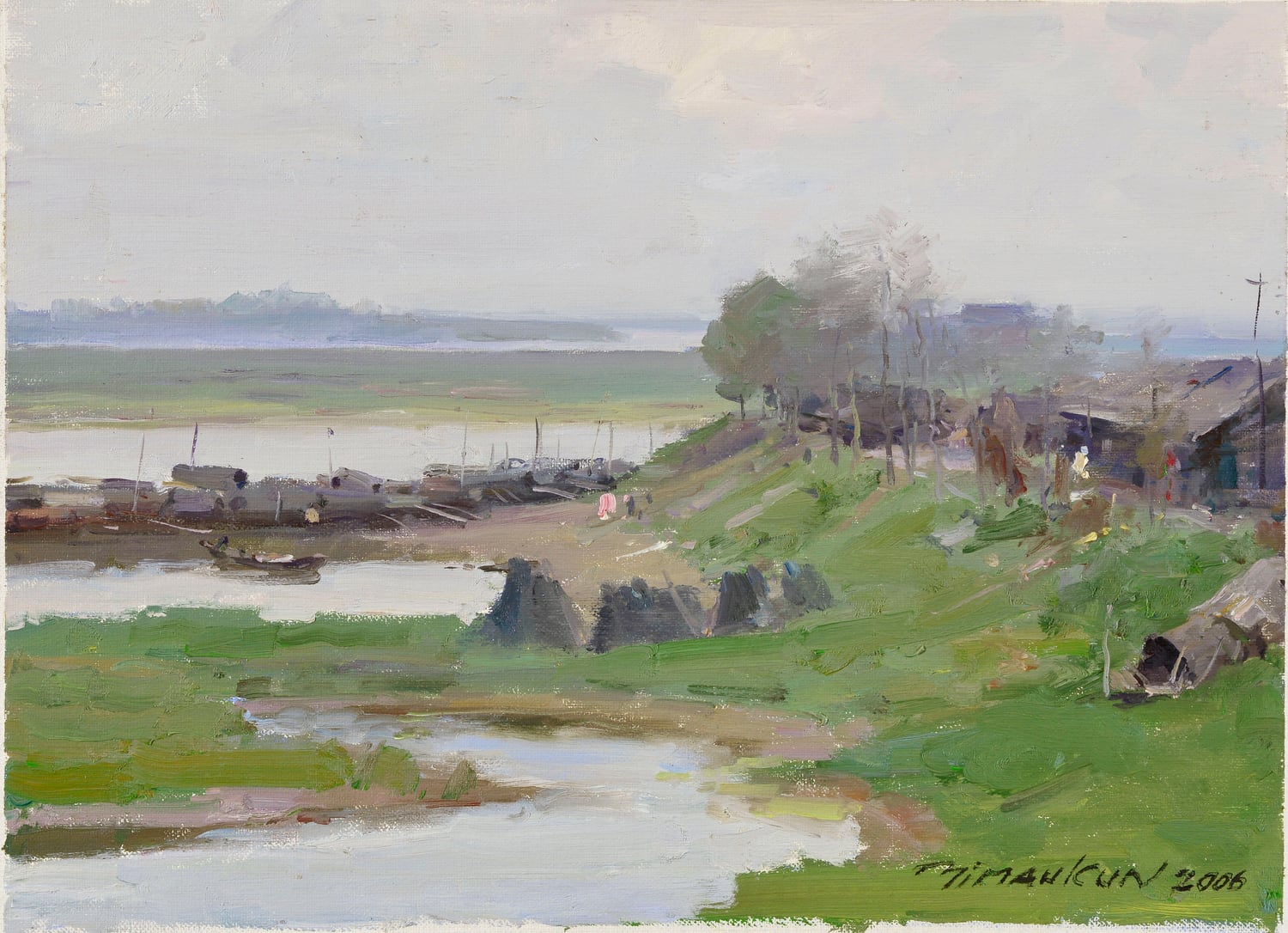
Many years later, Yim Mau-Kun returned once again to Taoyuan, Hunan.
On that trip, he had been invited to exhibit at the Fine Arts College of Hunan Normal University and in the Changde area. During the visit, he also joined local Changde artists on a sketching trip into the mountains of Taoyuan.
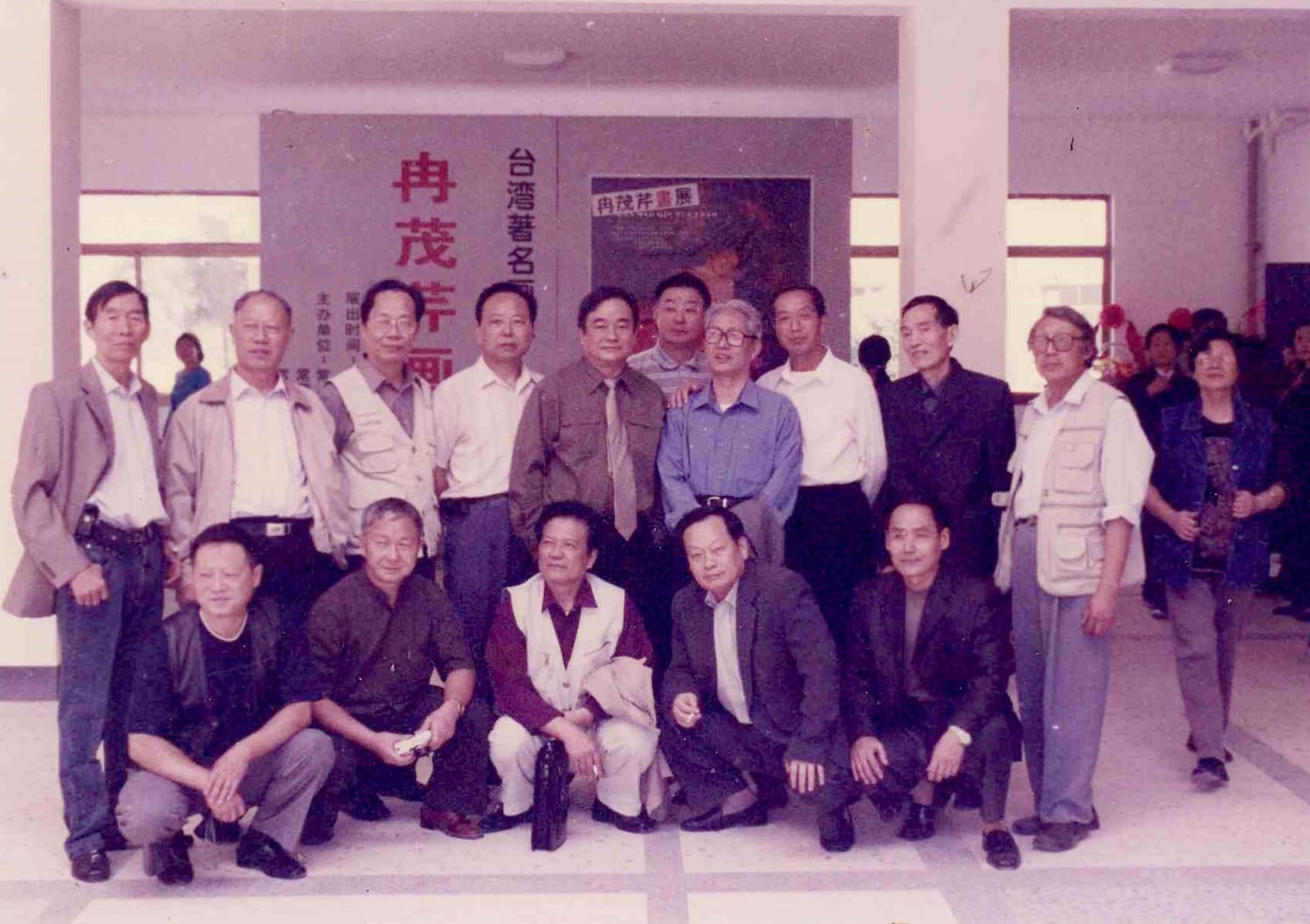
The bus happened to travel along a road that passed through the area where he had lived as a child.
Sanyanggang.
As the bus passed Songgui Mountain, Yim suddenly asked the driver to stop.
He had not seen the people he was thinking of for more than sixty years. He did not know whether they were still there.
But he wanted to find out.
He got off the bus and walked toward a small roadside shop that was already leaning and somewhat dilapidated.
He asked the woman inside:
Is Sister Lan here?
The woman looked at him and suddenly said:
I am Sister Lan!
Then, as if she recognized him all at once:
Oh — you are Mau-Kun!
Yim asked about Sister Cai.
Sister Lan immediately turned toward the back of the shop and called out:
Sister Cai! Come see who is here. It is Mau-Kun!
A moment later, a small elderly woman came around the corner behind the shop.
It was Sister Cai.
The young woman who had lived next to Third Uncle more than sixty years earlier, always laughing as she called out for Tao Mao'er, had grown old.
Sister Cai More Than Sixty Years Earlier
The moment Yim saw her, however, the image that came to mind was not the elderly woman standing before him.
He remembered her as she had been in his childhood.
Sister Cai had only recently married into the Tao family and had just given birth to a son when her husband left with the Nationalist forces for Taiwan.
Like many families of her generation whose lives were divided by 1949, the husband went to the other side of the Taiwan Strait, while his wife and child remained behind.
Sister Cai raised her son on her own.
That child was Tao Mao'er.
A U-Shaped Timber-and-Tile House
Sister Cai's family and Yim Mau-Kun's Third Uncle were neighbors.
The two households lived on opposite sides of the same U-shaped timber-and-tile house.
There was a pond in front of the house, a vegetable garden behind it, and farther back, a small wooded hill.
Masson pines swayed on the slope, and several tall chestnut trees grew among them.
In autumn, when the chestnuts ripened and fell, the children gathered beneath the trees to pick them up.
It was one of the clearest scenes in Yim's childhood memory: children with their heads bent, searching for chestnuts among the leaves and earth, while the pines moved in the wind.
And among those sounds, another voice often carried from the house:
Tao Mao'er —
It was Sister Cai calling her son.
“Tao Mao'er…”
More than sixty years later, Yim could still remember the sound of Sister Cai calling for her child.
Clear. Loud. Usually followed by laughter.
He also remembered the way she looked when she was young: cheerful, always smiling, with prominent front teeth and deep dimples.
So in Yim's childhood memory, the name Tao Mao'er was connected to much more than one boy.
It belonged to the timber house, the pond, the vegetable garden, the pines, and the chestnut trees.
Whenever he remembered that place, it was almost as if he could hear Sister Cai's voice again:
Tao Mao'er…
Her Husband Went to Taiwan
Tao Mao'er was still very young when his father left the mainland.
From then on, Sister Cai raised him alone.
Yim's manuscript does not describe in detail how mother and son lived through the decades that followed. It does not say how Sister Cai supported the household, how Tao Mao'er grew up, or exactly what they experienced through the political campaigns and difficult years.
Those gaps should not be filled in for them.
The manuscript leaves only a few important facts.
Later, when veterans in Taiwan were permitted to return to the mainland for family visits, Tao Mao'er's father came back once.
He visited Sister Cai and their son.
After that visit, however, there was little further news.
Tao Mao'er Always Wanted to See His Father in Taiwan
Tao Mao'er never married.
There was one thing he could never put aside: he wanted to go to Taiwan to see his father.
The father who had left when he was still a small child. The father who remained part of his life across the sea, but absent from his daily world.
According to Yim Mau-Kun's manuscript, Tao Mao'er longed to go to Taiwan.
But his father would not agree.
Why? The manuscript gives no answer.
Perhaps Tao Mao'er knew. Perhaps Sister Cai knew. Perhaps there were things within the family that were never fully explained.
Yim did not try to explain it for them.
He left only the facts: the son wanted to go; the father did not agree.
He Never Lived to Make the Trip
Later, Tao Mao'er became ill.
He did not recover.
When Yim returned to Sanyanggang, he learned that Tao Mao'er had died not long before.
The son Sister Cai had raised alone from childhood, who had never married and who had always wanted to travel to Taiwan to see his father, never lived to make that journey.
The Yellow-Earth Slope Across from the House
Sister Cai buried her son on a yellow-earth slope across from the house.
She took Yim to see the grave.
It was simple. Old bamboo poles and pieces of wood stood unevenly across the slope.
In his manuscript, Yim used only a few words to describe what he saw:
Lonely and desolate…
For Sister Cai, however, this was the final place she could choose for her son.
It was not far away.
It was directly across from the house.
She could see it every day.
“I Can See Him Whenever I Open the Door”
Standing by her son's grave, Sister Cai murmured:
I buried him across from the house. I can see him whenever I open the door…
It may be the most memorable sentence in the entire recollection.
She did not describe her own grief. She did not recount the decades of raising her son alone. She did not complain that Tao Mao'er had never been able to go to Taiwan to see his father.
She only explained why she had buried him there.
Every time she opened the door, she could see him.
Sixty Years Earlier, She Had Called His Name
The moment overlapped with a scene from more than sixty years before.
Sister Cai was young then. Tao Mao'er was still a child.
There were Masson pines behind the house and chestnuts in autumn. Yim and the other children searched beneath the trees.
Then Sister Cai's clear voice would carry from the timber house:
Tao Mao'er —
followed by laughter.
Yim even remembered her prominent front teeth and deep dimples.
Now Tao Mao'er lay beneath the yellow-earth slope across from the house.
Sister Cai no longer had to call his name loudly.
She only had to open the door.
Yim Mau-Kun Could Not Speak
When he heard Sister Cai's words, Yim's throat tightened. He could not speak.
He did not try to comfort her. There are some things for which it is difficult to find words of comfort.
He simply reached out and gently patted her now-bent back.
More than sixty years earlier, she had been a young mother whose husband had gone to Taiwan. She had raised her son alone.
Now her husband had long since disappeared from her daily life, and her son was gone as well.
She was alone again.
Yim wrote in his manuscript:
Once again, she was left alone, with no one to depend on.
Another Family Divided by 1949
Sister Cai's story may have been especially difficult for Yim Mau-Kun because its outline so closely resembled part of his own childhood.
Around 1949, his father, Ran Peng, had also gone to Taiwan.
His mother, Huangfu Dao'an, remained in Hunan with the children.
His father had also believed at first that he would be able to return after settling in Taiwan. Instead, the Taiwan Strait separated the family.
Much of Yim's childhood was also spent in a family in which the father was in Taiwan.
But Yim's life eventually followed a different path.
He left Hunan, entered art school, later left the mainland, and eventually reached Taiwan himself.
Tao Mao'er did not.
He remained in Sanyanggang, thinking throughout his life about the father across the strait, yet never managing to make the journey.
Two children whose childhoods had both been divided by 1949 ultimately arrived at very different destinations.
A Little Money
Before leaving, Yim took out some renminbi and gave it to Sister Lan and Sister Cai.
As when he had visited his cousins in Qingjiaping a few years earlier, the money could not restore anything.
It could not return more than sixty years. It could not allow Tao Mao'er to make the trip to Taiwan. It could not make Sister Cai young again, laughing as she called her son beneath the chestnut trees.
It was simply that, after so many years, they had met again, and the people before him had reached the later part of their lives.
If he could leave something behind, he would.
Covering His Mouth as He Walked Back to the Bus
At last, Yim had to leave.
The others traveling with him were still waiting. The bus stood on the road ahead.
He said goodbye to Sister Cai and turned toward the vehicle.
In his own manuscript, he recorded one very small gesture:
Covering my mouth, I walked toward the bus waiting ahead…
He did not wave. He did not turn back. He said nothing more.
He simply covered his mouth and kept walking.
Perhaps he was afraid he would begin to cry.